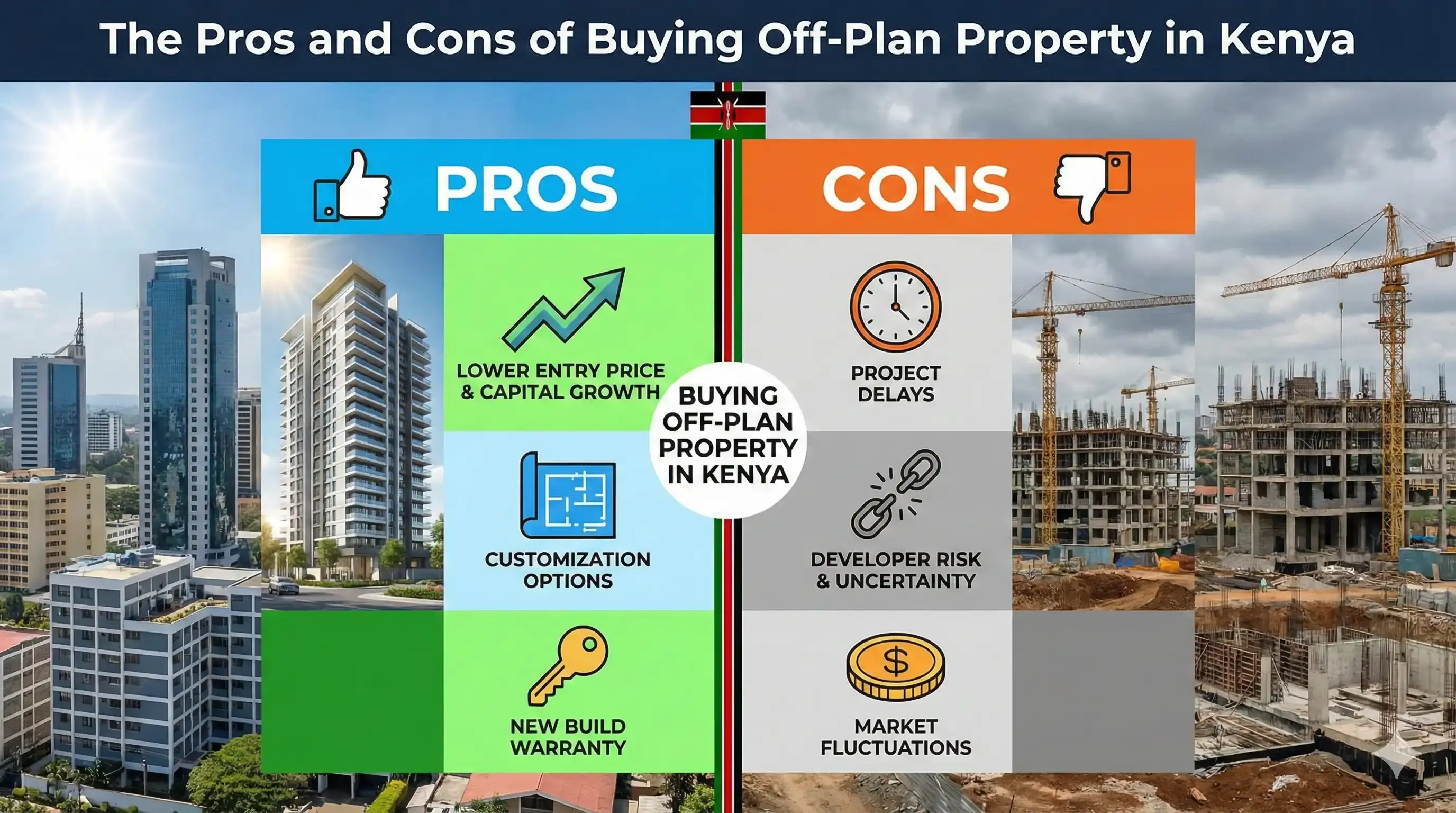
Off-plan real estate has become one of Kenya’s most talked-about investment strategies—especially in fast-growing areas like Nairobi, Kiambu, Mombasa, and Nakuru. Developers advertise sleek showrooms, attractive payment plans, and 20%+ discounts if you commit early.
But behind the glossy brochures is a truth every buyer must understand: buying off-plan can build wealth—or become your biggest financial loss.
This comprehensive guide for Masion.co.ke breaks down the benefits, risks, red flags, and expert tips to help you make a safe, profitable decision.
What Exactly Is Off-Plan Property?
Off-plan property means buying a home or apartment before construction is finished, often when only the foundation—or even just the architectural plans—exist.
Most developers use a staged payment approach:
10–30% deposit
Monthly or quarterly installments during construction
Final payment upon handover
This allows buyers to secure a property without needing the full amount upfront, making off-plan ideal for investors, first-time buyers, and diaspora clients.
⭐ Advantages of Buying Off-Plan Property in Kenya
1. Lower Purchase Prices & Early-Bird Discounts
Off-plan units are significantly cheaper than completed properties—sometimes by 10–30%.
Example:
A 3-bed apartment valued at KSh 10M at completion may be offered at KSh 7.5M–8M off-plan.
This immediate discount means instant equity once construction is done.
2. Flexible Payment Plans
Most developers allow long-term installment schedules such as:
Monthly payments over 24–48 months
Quarterly payment plans
Deposit now, balance on completion
Pay using bank financing later
This flexibility makes it easier for buyers to invest without financial pressure.
3. High Appreciation Potential
Well-located off-plan projects appreciate significantly before handover.
Case Study:
Off-plan apartments in Ruaka sold for KSh 6M in 2018.
By 2021, the same units were valued at KSh 9M.
This shows why investors love off-plan—high ROI with low entry cost.
4. Personalization Options
Early buyers often choose:
Kitchen designs
Floor tiles
Paint colors
Layout modifications
This gives a custom feel that finished units rarely provide.
5. Modern Amenities
Most off-plan projects include lifestyle features like:
Gyms
Swimming pools
Rooftop lounges
Co-working spaces
High-speed lifts
Backup generators
These amenities increase rental returns and resale value.
⚠️ Risks of Buying Off-Plan Property in Kenya
While off-plan has great benefits, the risks are real—and must be understood clearly.
1. Construction Delays (Very Common)
Projects often experience delays due to:
Lack of developer funding
Contractor disputes
County approval delays
Material shortages
Overambitious timelines
A 2024 Nairobi market survey showed over 40% of off-plan projects were delivered 12–24 months late.
2. Quality May Be Lower Than Promised
Upon completion, some buyers discover:
Smaller rooms
Different finishes from the brochure
Low-grade tiles or fittings
Missing amenities
Poor workmanship
This happens mostly with inexperienced or dishonest developers.
3. Developer Fraud & Scams
Unfortunately, Kenya has seen cases where developers:
Sell the same unit to multiple buyers
Disappear with deposits
Start construction without approvals
Use buyer funds to finish other projects
Red flags include:
No previous completed projects
Incomplete documentation
No site visits allowed
Vague contracts
Always proceed with caution.
4. Mortgage or Financing Problems
Banks may refuse to finance if:
The developer isn’t approved
Construction stops
The project is overvalued
The property is not structurally compliant
This may force buyers to seek emergency funding.
5. Market Fluctuations
If real estate demand falls, your property’s value may stagnate or decline by completion. Location choice is more important than ever.
🛡️ How to Protect Yourself When Buying Off-Plan
Here is how to invest safely and avoid stress:
✔️ 1. Research the Developer Thoroughly
Check:
Completed projects (physically visit them)
Company registration on eCitizen
Reviews from previous buyers
Track record for handover timelines
If they have no completed projects, proceed with caution.
✔️ 2. Verify All Approvals
Confirm the project has:
County building approvals
Architectural and structural plans
NEMA environmental audit
Title deed verification
Project registration
Never rely on verbal promises—ask for documented proof.
✔️ 3. Use a Property Lawyer
Your lawyer should review:
The sale agreement
Payment schedule
Penalties for delays
Warranty clauses
Title deed status
This step prevents 90% of off-plan disputes.
✔️ 4. Request Payments Tied to Construction Milestones
Instead of paying monthly blindly, insist on:
Payments after foundation
After first floor
After roofing
After plastering
This protects your money and ensures the developer stays accountable.
✔️ 5. Visit the Construction Site Regularly
Frequent visits help you spot:
Slow progress
Quality issues
Structural concerns
Take photos or videos for documentation.
🧠 Who Should Consider Buying Off-Plan?
Good For:
Long-term investors
Buyers wanting a flexible payment plan
People who prefer modern homes
Buyers familiar with the developer
Those who want high capital gains
Not Ideal For:
Buyers who need immediate occupation
Risk-averse investors
Buyers unwilling to wait 2–4 years
People unfamiliar with the developer’s reputation
Final Thoughts
Buying off-plan property in Kenya can be one of the smartest investments—if done correctly. You enjoy lower prices, flexible payments, and strong appreciation. But the risks are equally real: delays, poor quality, and in some cases, fraud.
Before signing anything, do thorough due diligence, work with professionals, and ensure the project is fully approved.
Looking for Verified, Safe, and High-Quality Properties?
Explore vetted listings on Masion.co.ke, where every property undergoes strict verification for ownership, approvals, and developer credibility.
A little more clarity
Frequently asked questions
What does this article cover?
Off-plan real estate has become one of Kenya’s most talked-about investment strategies—especially in fast-growing areas like Nairobi, Kiambu, Mombasa, and Nakuru. Developers advertise sleek showrooms, attractive payment plans, and 20%+ discounts if you commit early.
How can I find properties related to my requirements?
Browse the property listings and filter by location, price, and property type. You can also use Request a Property to share your requirements and receive matching suggestions.
How can I ask about a property?
Open the property page to review its details and contact the listing agent using the enquiry options shown there. Confirm availability and arrange a viewing with the agent.
Join the conversation
Comments
Looking for a property?Get help with a request tailored to your location and budget.
No comments yet. Share a thought or ask a question above.