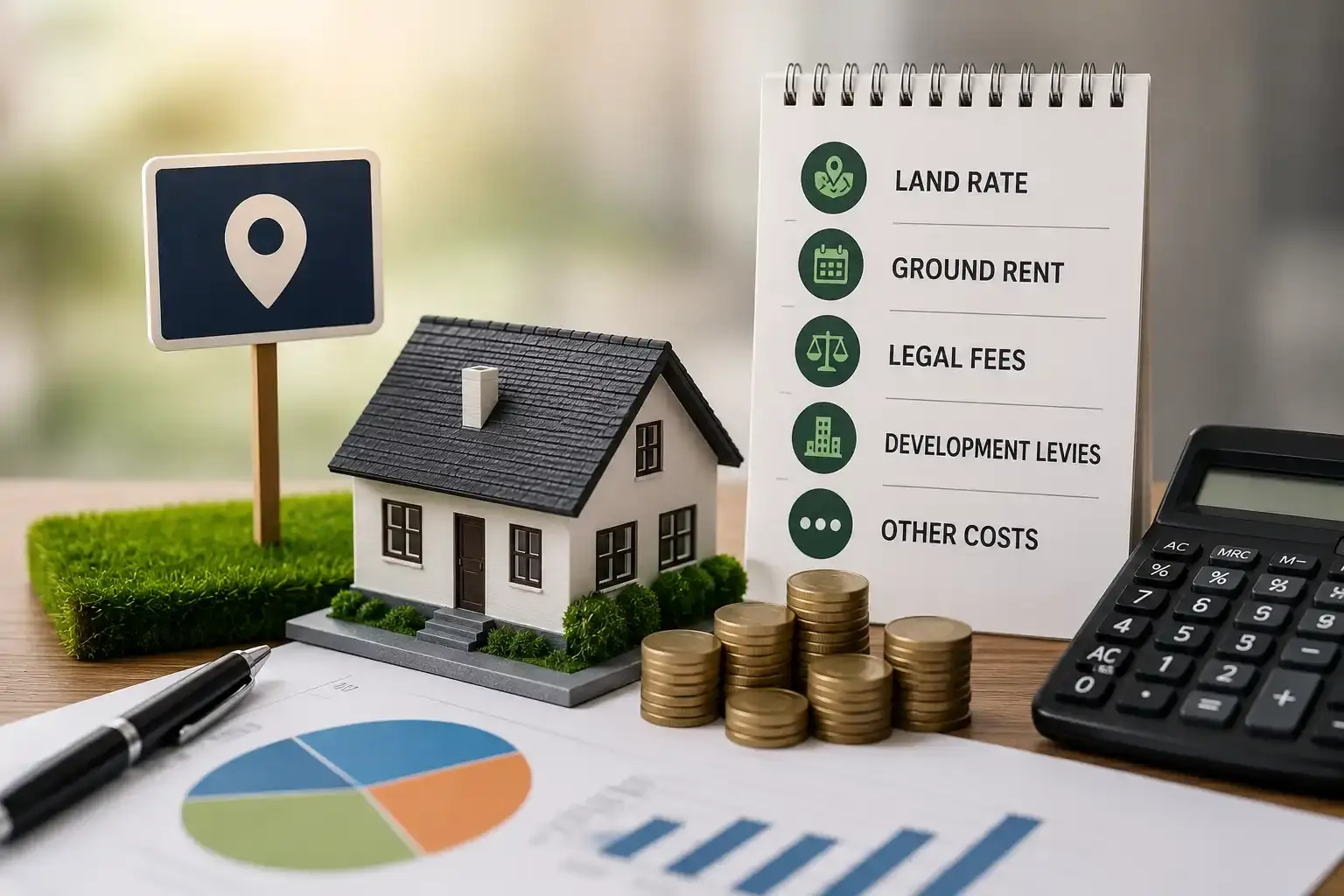
When most people budget for land, they focus on one number: the purchase price. But that figure is only the beginning of the story. Land ownership in Kenya comes with a set of recurring and one-time costs that, if overlooked, can quietly erode your investment returns or catch you off guard years down the line.
Whether you're land banking for future appreciation or planning to build immediately, understanding these costs upfront is essential to making a sound financial decision. This guide breaks down land rates, ground rent, and the other hidden expenses every land buyer in Kenya should know.
Land Rates vs. Ground Rent: What's the Difference?
These two terms are often confused, but they apply to different types of land and are paid to different authorities.
Land Rates
Land rates are annual charges levied by county governments on properties within their jurisdiction, primarily on freehold land and land within municipalities or urban areas. The revenue collected funds county services like roads, waste management, and public infrastructure.
- Who collects it: County government
- Applies to: Freehold land, and leasehold land in some municipalities
- Calculation basis: Typically based on the unimproved site value of the land, though rates vary by county
- Consequence of non-payment: Accumulated arrears with penalties, and a land rates clearance certificate becomes mandatory before any sale or transfer
Ground Rent
Ground rent, on the other hand, applies specifically to leasehold land — land held under a lease from the government (typically 99-year or 999-year leases) rather than owned outright.
- Who collects it: National government, through the Ministry of Lands
- Applies to: Leasehold land only
- Calculation basis: Often a nominal or fixed annual amount specified in the lease agreement, though this can be reviewed periodically
- Consequence of non-payment: Risk of lease forfeiture in extreme cases, and it will block land transactions until cleared
The key takeaway: if your land is freehold, you'll deal with land rates. If it's leasehold, you'll pay both ground rent (to the national government) and potentially land rates (to the county), depending on location and classification.
Why These Costs Matter for Land Banking
If you're land banking — holding land for years before selling or developing — these recurring costs add up over time and directly affect your net returns. A plot that seems like a bargain today could become a costlier holding than anticipated if:
- Land rates increase due to county revaluation
- Ground rent is reviewed upward at lease renewal periods
- Arrears accumulate because the land changed hands without proper transfer of payment records
Before purchasing for land banking purposes, always request a land rates clearance certificate and, where applicable, confirm the ground rent payment status directly with the Ministry of Lands.
Other Hidden Costs to Budget For
Beyond the recurring annual charges, several one-time and situational costs often catch buyers off guard.
1. Stamp Duty Payable upon transfer of land, stamp duty in Kenya is typically 4% of the property value in urban areas and 2% in rural areas. This is a significant cost that must be factored into your total purchase budget, not treated as an afterthought.
2. Legal Fees Engaging an advocate to handle due diligence, draft the sale agreement, and facilitate transfer is essential — and comes with a fee, usually a percentage of the transaction value or a fixed rate agreed upon with your lawyer.
3. Survey and Beaconing Costs If the land boundaries aren't clearly marked or verified, you may need to commission a licensed surveyor to confirm boundaries and re-establish beacons — protecting you from future boundary disputes with neighbors.
4. Land Search and Due Diligence Fees Conducting an official search at the Ministry of Lands to verify the title's authenticity and check for any encumbrances (like caveats or existing loans against the land) comes with a nominal fee, but it's a non-negotiable step that protects your investment.
5. Transfer and Registration Fees Once a sale is complete, transferring the title into your name involves registration fees payable to the Ministry of Lands, separate from stamp duty.
6. Valuation Fees If you're financing the purchase through a bank or mortgage, lenders typically require a professional valuation of the land, which comes at your cost.
7. Access Road and Utility Costs (for future development) If you plan to eventually build, factor in potential costs for accessing the plot — such as contributing to a shared access road, or extending water and electricity connections, especially in newer or less-developed areas.
8. Fencing and Security For land banking specifically, an undeveloped plot is vulnerable to encroachment or illegal occupation. Many investors budget for basic fencing or periodic site visits/security to protect their investment while it appreciates.
A Realistic Cost Checklist Before You Buy
Before finalizing any land purchase, confirm and budget for:
- Purchase price
- Stamp duty (2–4% depending on location)
- Legal fees
- Land search fees
- Survey/beaconing costs (if boundaries are unclear)
- Transfer and registration fees
- Outstanding land rates or ground rent arrears (confirm clearance certificate)
- Valuation fees (if financing)
- Fencing/security costs (for land banking)
- Future access road or utility connection costs (for eventual building)
The sticker price of land is never the full picture. Land rates and ground rent are ongoing obligations that continue for as long as you hold the property, while one-time costs like stamp duty, legal fees, and due diligence charges can add a meaningful percentage on top of your purchase price.
The smartest land buyers — whether banking for the long term or building immediately — treat these costs as part of their initial investment calculation, not an afterthought. Doing so protects your returns and ensures there are no unpleasant surprises down the road.
At Masion, we guide our clients through every cost consideration before they commit — from verifying rates clearance to estimating the full cost of ownership. Talk to our team to get a transparent breakdown before you invest.
Want to learn more about protecting your land investment? Check out our guides on due diligence checklists and common land banking scams to avoid.
A little more clarity
Frequently asked questions
What does this article cover?
When most people budget for land, they focus on one number: the purchase price. But that figure is only the beginning of the story. Land ownership in Kenya comes with a set of recurring and one-time costs that, if overlooked, can quietly erode your investment returns or catch you off guard years down the line.
How can I find properties related to my requirements?
Browse the property listings and filter by location, price, and property type. You can also use Request a Property to share your requirements and receive matching suggestions.
How can I ask about a property?
Open the property page to review its details and contact the listing agent using the enquiry options shown there. Confirm availability and arrange a viewing with the agent.

Join the conversation
Comments
Looking for a property?Get help with a request tailored to your location and budget.
No comments yet. Share a thought or ask a question above.