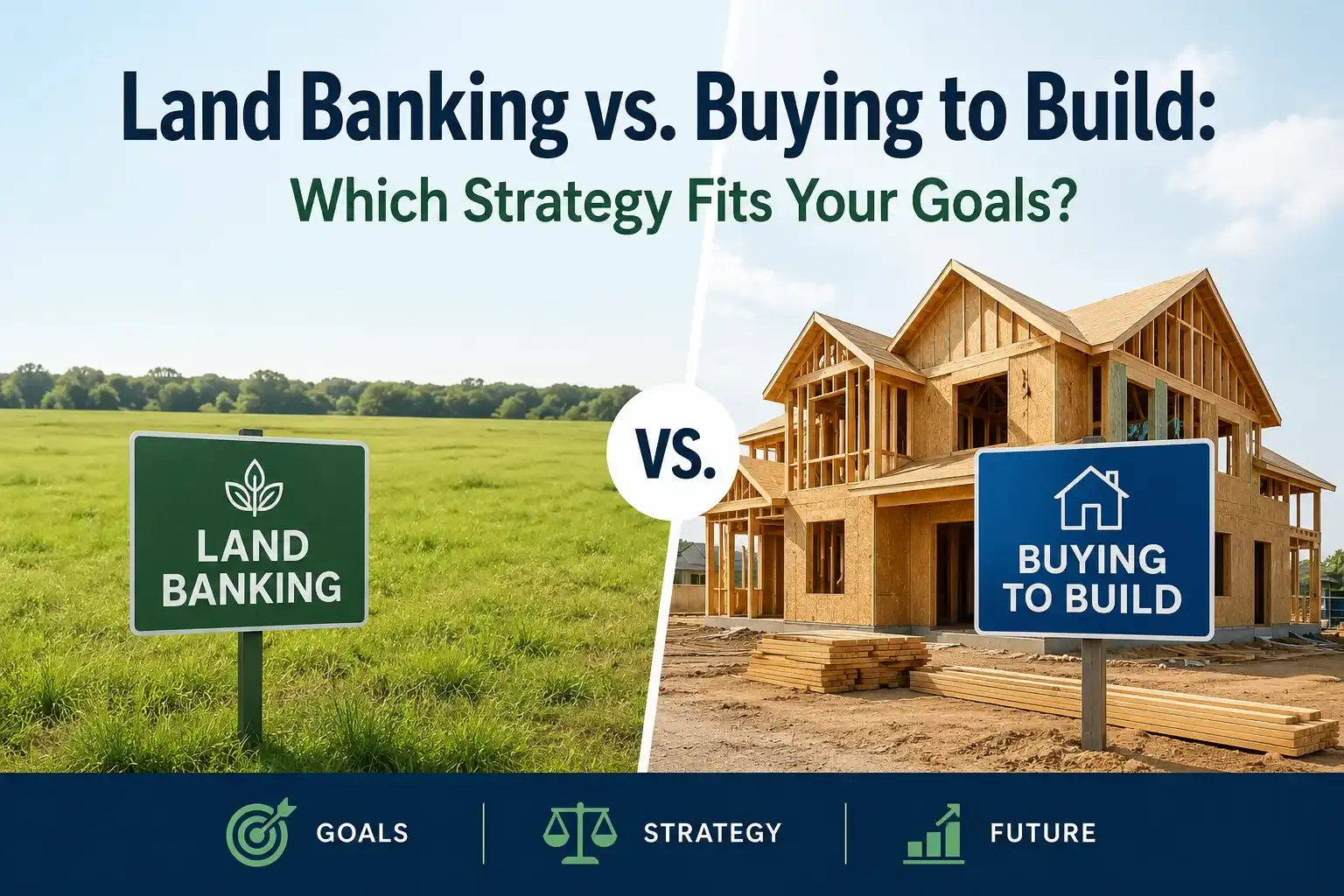
If you're standing at the crossroads of a real estate decision, chances are you've asked yourself this question: should I buy land purely as an investment, or should I buy land to build on right away?
It's one of the most common dilemmas facing property buyers in Kenya today. Both paths lead to land ownership, but they serve very different financial goals, timelines, and lifestyles. Understanding the distinction — and which one suits you — can save you years of second-guessing and thousands of shillings in missed opportunity or unnecessary costs.
In this guide, we break down land banking and buying-to-build side by side, so you can make a decision rooted in your actual goals, not just market hype.
What Is Land Banking?
Land banking is the practice of purchasing land purely as a long-term investment, with no immediate plan to develop or build on it. The strategy relies on one core principle: land appreciates in value over time, especially in areas poised for growth — think emerging suburbs, upcoming infrastructure corridors, or satellite towns near major cities.
Investors who land bank are essentially buying low and waiting for the market to catch up. They may hold the land for five, ten, or even twenty years before selling it at a significant profit, or eventually developing it once the surrounding area has matured.
What Does "Buying to Build" Mean?
Buying to build is more straightforward: you purchase land with the specific intention of constructing a home, rental units, or commercial property on it in the near term. This strategy is goal-oriented toward immediate or near-immediate use — whether that's moving your family into a new home, generating rental income, or running a business.
Unlike land banking, the value here isn't just in the land itself but in what you build on it and how quickly that structure starts serving your needs or generating returns.
Key Differences at a Glance
| Factor | Land Banking | Buying to Build |
|---|---|---|
| Primary Goal | Long-term capital appreciation | Immediate use or income generation |
| Timeline | 5–20+ years | Months to 1–2 years |
| Upfront Costs | Lower (land only) | Higher (land + construction) |
| Ongoing Costs | Land rates, minimal maintenance | Construction, utilities, maintenance |
| Risk Level | Moderate (market-dependent) | Higher upfront risk, faster reward potential |
| Liquidity | Lower — depends on resale market | Can generate rental income sooner |
| Ideal For | Investors with patience and capital to spare | Buyers needing housing or income now |
The Case for Land Banking
1. Lower Barrier to Entry Land banking typically requires less capital upfront since you're not budgeting for construction costs, permits, or finishing materials. This makes it accessible to first-time investors or those building wealth gradually.
2. Passive Investment Once you've done your due diligence and secured the land, land banking requires minimal ongoing effort. There's no tenant management, no construction oversight — just patience and periodic land rate payments.
3. Strategic Appreciation Land in high-growth corridors — areas near new roads, railways, or planned developments — can appreciate significantly faster than developed property in stagnant markets. Savvy investors who identify these corridors early often see substantial returns.
4. Flexibility for the Future Land banked today can be developed, sold, or even subdivided later, giving you multiple exit strategies depending on how your goals evolve.
Limitations to Consider Land banking ties up capital for extended periods without generating income in the meantime. It also carries risks if the anticipated growth in the area doesn't materialize as expected, or if land rates and holding costs erode your margins over time.
The Case for Buying to Build
1. Immediate Utility If you need a home now, or want to start earning rental income, building immediately solves that need without waiting years for appreciation.
2. Faster Return on Investment Rental units or commercial spaces can start generating income within a year or two of purchase, offsetting the higher upfront investment more quickly than a pure land-banking strategy.
3. Control Over Property Value When you build, you directly influence the property's value through design, quality, and amenities — rather than relying solely on market forces to drive appreciation.
4. Tangible Asset Sooner There's a psychological and financial security that comes with having a completed structure — whether it's your family home or an income-generating asset — rather than an undeveloped plot.
Limitations to Consider Building requires significantly more capital, both for construction and for navigating approvals, contractors, and unforeseen costs. It also demands more active involvement, at least during the construction phase.
Which Strategy Fits Your Goals?
Ask yourself these questions to guide your decision:
- What's my investment horizon? If you're comfortable waiting 5+ years for returns, land banking may suit you. If you need income or housing sooner, building is the better fit.
- How much capital do I have available now? Land banking requires less initial capital; building requires a bigger, often ongoing, financial commitment.
- Do I want an active or passive investment? Building involves managing contractors, timelines, and approvals. Land banking is largely hands-off once purchased.
- What's my risk tolerance? Land banking risk is tied to market appreciation; building risk is tied to construction costs, delays, and market demand for the finished product.
- Is the location development-ready? Some areas simply aren't suited for building yet due to infrastructure gaps — but may be excellent land banking opportunities for the future.
A Hybrid Approach: Can You Do Both?
Many savvy investors don't choose one strategy exclusively — they diversify. You might land bank in an emerging area with strong future potential, while simultaneously buying to build in a more developed area where immediate returns are possible. This balances long-term growth with short-term income, spreading risk across different timelines.
There's no universally "better" strategy between land banking and buying to build — only the one that's better suited to your financial goals, timeline, and risk appetite. Land banking rewards patience and strategic foresight, while buying to build rewards those who need immediate utility or faster returns.
Whichever path you choose, the fundamentals remain the same: verify the title deed, understand the zoning and land use regulations, assess the area's growth trajectory, and work with a trusted real estate partner who can guide you through due diligence.
At Maison, we help investors navigate both strategies with confidence — from identifying high-potential land banking opportunities to guiding you through a successful build. Reach out to our team to explore which strategy aligns best with your goals.
Looking for more guidance on real estate investment in Kenya? Explore our other articles on due diligence, title verification, and spotting land banking scams before you invest.
A little more clarity
Frequently asked questions
What does this article cover?
If you're standing at the crossroads of a real estate decision, chances are you've asked yourself this question: should I buy land purely as an investment, or should I buy land to build on right away?
How can I find properties related to my requirements?
Browse the property listings and filter by location, price, and property type. You can also use Request a Property to share your requirements and receive matching suggestions.
How can I ask about a property?
Open the property page to review its details and contact the listing agent using the enquiry options shown there. Confirm availability and arrange a viewing with the agent.

Join the conversation
Comments
Looking for a property?Get help with a request tailored to your location and budget.
No comments yet. Share a thought or ask a question above.