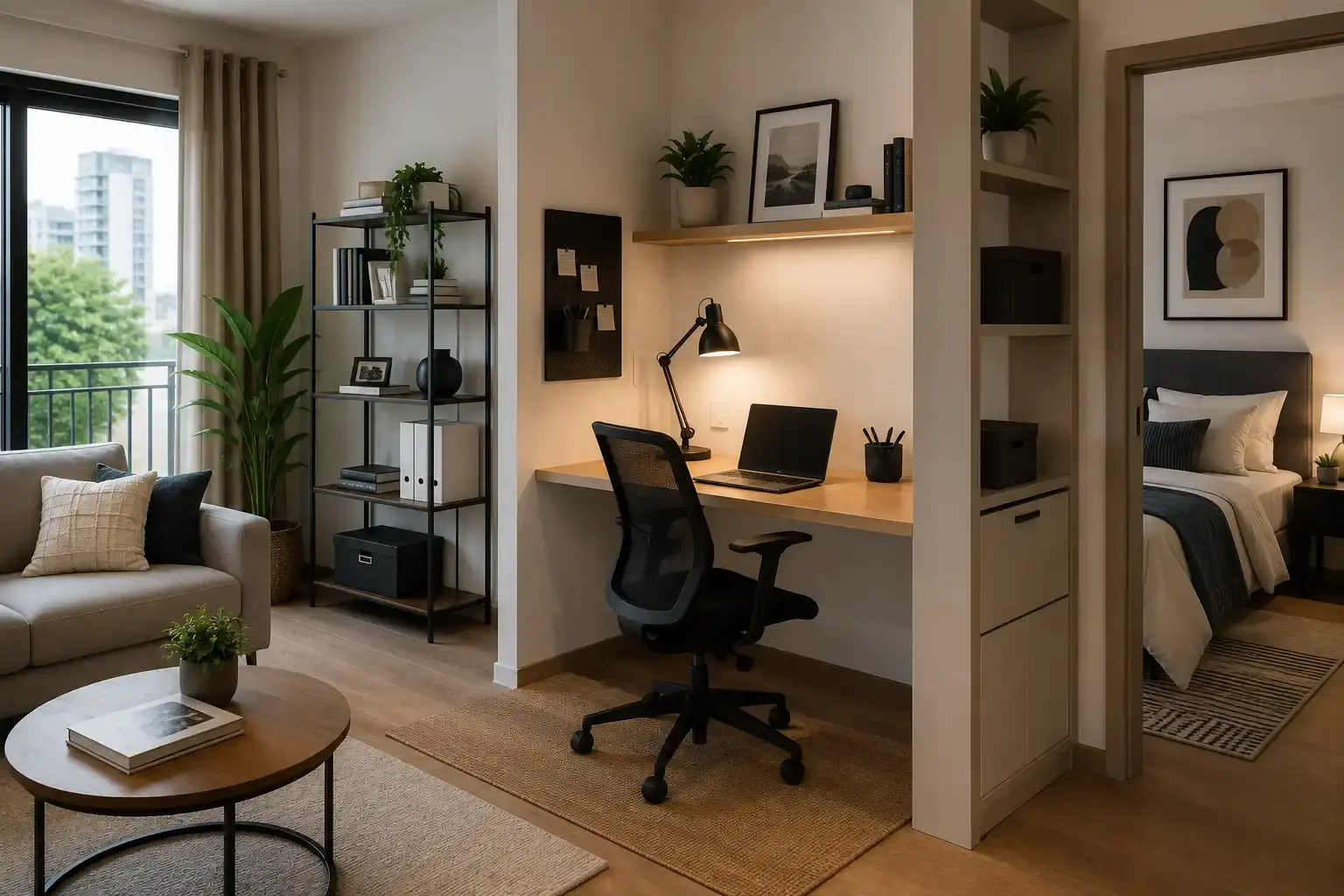
Remote and hybrid work have made a dedicated workspace a genuine necessity for many renters — but a one-bedroom apartment rarely comes with a spare room to convert into an office. The good news: with the right approach, you can create a functional, comfortable workspace without sacrificing your living or sleeping space, or violating your lease.
1. Choose the Right Spot Before Buying Anything
Before purchasing any furniture, walk through your apartment and identify the best available spot based on:
- Natural light — working near a window improves focus and mood significantly over a full workday
- Distance from distractions — ideally away from the TV or a high-traffic path through the apartment
- Noise levels — a corner away from the kitchen or a shared wall, if video calls are part of your routine
- Minimal disruption to other functions — a spot that doesn't block movement through the apartment or eat into your only seating area
Common good options include an underused corner of the living room, a section of the bedroom, or even a well-organized nook near the entryway.
2. Use a Room Divider to Create Visual Separation
If your workspace shares space with your living or sleeping area, a simple visual boundary helps your brain switch between "work mode" and "home mode" — genuinely useful for both productivity and being able to mentally switch off at the end of the day. A folding screen, a tall bookshelf (open-backed or closed), or even strategically placed curtains can create this separation without any permanent structural change.
3. Choose a Compact, Purpose-Built Desk
Oversized desks are one of the most common mistakes people make in a small apartment office. Look instead for:
- Slim, wall-mounted or corner desks designed specifically for compact spaces
- Fold-down desks that flatten against the wall when not in use — ideal if your workspace shares an area with another function
- Desks with built-in storage (drawers or shelving) to avoid needing a separate storage unit
4. Prioritize an Ergonomic Chair, Even in a Small Setup
It's tempting to make do with a dining chair or a decorative accent chair, but working full days without proper back and posture support leads to real discomfort over time. A compact ergonomic chair is worth prioritizing even if it means compromising on other furniture choices — this is one area where function should clearly outrank aesthetics.
5. Use Vertical Storage to Keep Your Desk Clear
A cluttered desk in a small apartment quickly bleeds into the rest of your living space, visually and mentally. Wall-mounted shelves, a pegboard for supplies, or a slim vertical filing unit keep work materials organized and off your desk surface, without requiring additional floor space.
6. Think About Lighting Beyond Natural Light
Natural light is ideal during the day, but a good desk lamp is essential for early mornings, evenings, or overcast days. Choose a lamp with adjustable brightness and warmth — harsh, cold lighting for long work sessions can contribute to eye strain and fatigue faster than a well-chosen warmer light.
7. Manage Cables and Tech Clutter
In a small, shared-purpose space, visible cable clutter makes an area feel more chaotic and less "workspace-like." Cable clips, a small cable box, or simply routing cords along the back of furniture keeps your setup looking intentional rather than makeshift.
8. Consider Noise Management for Calls
If your apartment has thinner walls or you share space with a partner or roommate, a few practical additions help significantly:
- A rug under your desk area to absorb sound
- Noise-canceling headphones for calls
- Positioning your desk away from shared walls where possible, if layout allows
9. Create a "Shutdown" Routine for Shared Spaces
When your office shares a room with your living or sleeping space, it's easy for work to feel like it never really ends. A simple end-of-day habit — closing a laptop, folding down a desk, or drawing a room divider closed — creates a psychological boundary that a dedicated office room would provide automatically, but that a shared space needs you to build deliberately.
10. Personalize It Enough to Want to Sit There
A home office corner that feels purely functional and sterile is harder to stay motivated in. A plant, a piece of art, or a specific desk accessory you genuinely like makes the space feel like a place you want to work from, not just a spot you're forced to use.
A Few Layout Ideas by Apartment Type
- Studio apartments: A slim desk positioned along a wall, separated from the sleeping area with a room divider or bookshelf
- One-bedroom apartments: A corner of the living room (freeing the bedroom for rest) or a dedicated bedroom corner if the living room needs to remain fully social
- Apartments with a balcony: For climates and layouts that allow it, a small balcony desk setup can provide a genuinely separate "away from home" feeling within the same apartment
Find an Apartment With Room to Work
The right layout makes building a home office significantly easier. Whether you need a bit of extra living room space or a bedroom with a natural desk corner, Masion lists verified rental apartments across Kenya to help you find a home that fits how you actually live and work.
Browse rental listings at masion.co.ke.
FAQs
1. Where's the best place for a home office in a one-bedroom apartment? It depends on your layout and lifestyle — a living room corner with good natural light works well if you want to keep the bedroom purely for rest, while a bedroom corner suits those who want to preserve the living room as a fully social space.
2. Do I really need a room divider, or is it unnecessary for a small space? It's not strictly necessary, but it genuinely helps create a psychological boundary between "work" and "home" time, which can be harder to maintain in a fully open, undivided space.
3. What's the most important furniture piece to invest in for a small home office? An ergonomic chair, even a compact one, tends to matter more than desk size or aesthetics — working full days without proper support leads to real discomfort over time.
4. Can I set up a home office without drilling or making permanent changes? Yes — freestanding desks, room dividers, wall-mounted shelving using removable adhesive strips, and portable lighting can all create a functional office setup without violating a standard rental lease.
5. How do I stop work from "spilling over" into my living space mentally? Building a simple end-of-day shutdown routine — closing a laptop, folding a desk down, or closing a room divider — helps create the boundary a dedicated office room would normally provide automatically.
6. What's a common mistake people make when setting up a small home office? Choosing an oversized desk that overwhelms the space is one of the most common mistakes — a slim, purpose-built or fold-down desk almost always works better in a small apartment.
A little more clarity
Frequently asked questions
What does this article cover?
Remote and hybrid work have made a dedicated workspace a genuine necessity for many renters — but a one-bedroom apartment rarely comes with a spare room to convert into an office. The good news: with the right approach, you can create a functional, comfortable workspace without sacrificing your living or sleeping space, or violating your lease.
How can I find properties related to my requirements?
Browse the property listings and filter by location, price, and property type. You can also use Request a Property to share your requirements and receive matching suggestions.
How can I ask about a property?
Open the property page to review its details and contact the listing agent using the enquiry options shown there. Confirm availability and arrange a viewing with the agent.
Join the conversation
Comments
Looking for a property?Get help with a request tailored to your location and budget.
No comments yet. Share a thought or ask a question above.