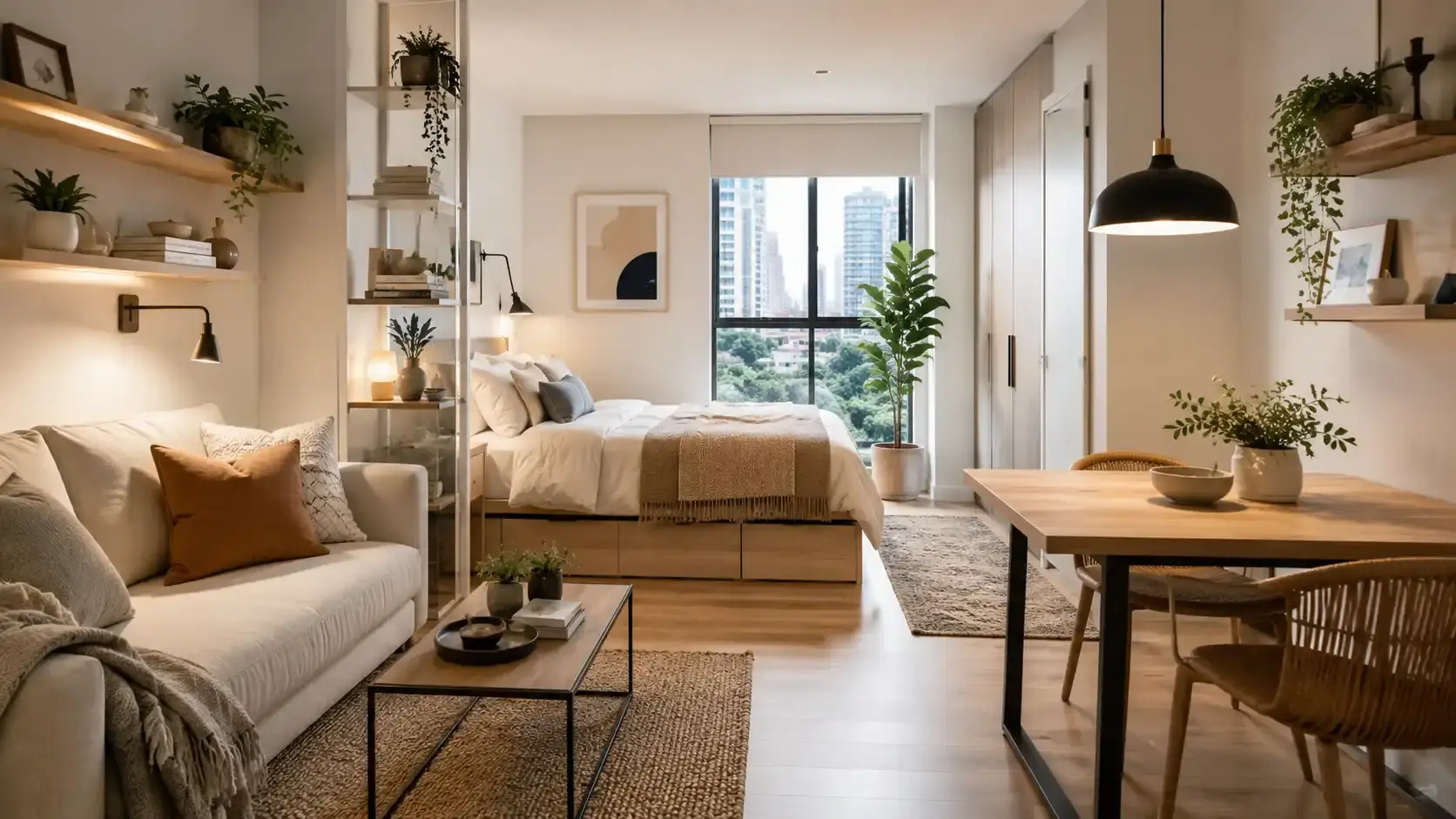
Studio apartments have become an increasingly popular choice in Nairobi — affordable, low-maintenance, and often in prime, central locations. But packing a bedroom, living room, kitchen, and sometimes a workspace into one open area comes with a real design challenge: how do you make it feel spacious, organized, and genuinely stylish rather than cramped?
The good news is that with the right approach, a studio can feel just as intentional and comfortable as a much larger apartment. Here's how to make it happen.
1. Zone Your Space, Even Without Walls
The biggest mistake in studio living is treating the entire space as one undivided area. Instead, create distinct visual "zones" — a sleeping area, a living area, a workspace — using furniture placement, rugs, or lighting to signal where one function ends and another begins. A rug under a small seating area, for instance, visually separates it from the sleeping zone even without a physical wall.
2. Choose Multi-Functional Furniture
In a studio, every piece of furniture should ideally do more than one job:
- A storage ottoman doubles as seating and hidden storage
- A sofa bed or daybed serves as seating by day and sleeping space by night
- A fold-down desk or table disappears against the wall when not in use
- A bed with built-in drawers underneath turns wasted space into practical storage
This approach lets you fit everything you need without the space feeling overloaded with single-purpose furniture.
3. Go Vertical
When floor space is limited, the walls become your best asset. Tall, narrow bookshelves, wall-mounted shelving, and hooks or pegboards for frequently used items all add storage and display space without eating into your usable floor area. Vertical storage also draws the eye upward, which can make ceilings — and the room as a whole — feel taller and more open.
4. Use Light, Reflective Colors
A light color palette — soft whites, warm neutrals, gentle pastels — reflects natural light and makes a small space feel airier and larger. This doesn't mean the space has to feel sterile: add personality and warmth through textiles, artwork, and accessories rather than large blocks of dark or heavy color, which tend to visually shrink a room.
5. Let Mirrors Do the Work
Strategically placed mirrors are one of the most effective (and affordable) tricks for making a small space feel larger. A large mirror positioned to reflect natural light or an open sightline can visually double a room's sense of depth. Even a few smaller mirrors, thoughtfully placed, add brightness and openness.
6. Keep Furniture Scale Proportional
It's tempting to buy furniture that looks great in photos, but oversized pieces overwhelm a small space fast. Choose furniture scaled appropriately to your studio's actual dimensions — a slightly smaller sofa or a compact dining set will feel far more comfortable to live with than a large piece that dominates the room and blocks natural movement.
7. Use Curtains or Screens to Create Flexible Privacy
If your studio needs to separate a sleeping area from a more public-facing living space — especially useful if you host guests occasionally — a curtain, folding screen, or even a well-placed bookshelf can create a flexible, semi-private boundary without the cost or permanence of an actual wall.
8. Prioritize Under-Bed and Hidden Storage
Storage is almost always the biggest challenge in a studio. Beyond furniture with built-in storage, simple solutions like under-bed storage bins, over-the-door organizers, and closet organizing systems make a significant difference in keeping a small space feeling tidy rather than cluttered.
9. Layer in Personality Through Small Details
Just because the space is small doesn't mean it should feel impersonal. Layer in personality through cushions, art, plants, and a few well-chosen decorative objects — these small touches make a studio feel like an intentional home rather than a temporary stopover, without requiring much square footage at all.
10. Keep Clutter Under Control
In a larger apartment, clutter can hide in unused corners. In a studio, it's immediately visible and can make even a well-designed space feel chaotic. A simple habit of returning items to designated storage spots daily goes a long way toward keeping a small space feeling calm and put-together.
A Few Style Directions to Consider
- Minimalist and airy — light colors, clean lines, minimal clutter, ideal for maximizing the sense of space
- Cozy and warm — richer textiles, warm lighting, and layered textures for a more intimate feel, balanced carefully to avoid feeling cramped
- Scandinavian-inspired — natural materials, functional furniture, and a light, uncluttered palette that works particularly well in small spaces
Find a Studio Apartment Worth Styling
A great decorating plan starts with the right space. Whether you're looking for a studio in Kilimani, Westlands, or elsewhere in Nairobi, Masion lists verified rental listings to help you find a home with the right layout and light for your style.
Browse available studio apartments at masion.co.ke.
FAQs
1. What's the biggest mistake people make when decorating a studio apartment? Treating the entire space as one undivided area rather than creating distinct zones for sleeping, living, and working, which tends to make the apartment feel cluttered and disorganized.
2. Do dark colors always make a small space feel smaller? Generally, yes — light, reflective colors tend to make a studio feel more open and airy, though dark colors can still be used sparingly as accents without overwhelming the space.
3. Are curtains a good alternative to walls in a studio? Yes. Curtains, folding screens, or even a bookshelf can create flexible, semi-private zones within a studio without the cost or permanence of building an actual wall — and most are easily removable, which matters for renters.
4. What furniture should I prioritize buying first for a studio apartment? Multi-functional pieces — like a storage ottoman, a bed with built-in storage, or a fold-down desk — tend to deliver the most value in a limited space, since each one serves more than one purpose.
5. How do I stop a small apartment from feeling cluttered? Prioritize hidden and vertical storage, keep furniture proportional to the space, and build a habit of returning items to designated spots daily, since clutter is far more visible and impactful in a studio than in a larger apartment.
6. Can a rented studio apartment still be personalized without violating the lease? Yes. Removable decor like art, curtains, rugs, plants, and cushions add personality without making permanent changes, keeping the space renter-friendly while still feeling like home.
A little more clarity
Frequently asked questions
What does this article cover?
Studio apartments have become an increasingly popular choice in Nairobi — affordable, low-maintenance, and often in prime, central locations. But packing a bedroom, living room, kitchen, and sometimes a workspace into one open area comes with a real design challenge: how do you make it feel spacious, organized, and genuinely stylish rather than cramped?
How can I find properties related to my requirements?
Browse the property listings and filter by location, price, and property type. You can also use Request a Property to share your requirements and receive matching suggestions.
How can I ask about a property?
Open the property page to review its details and contact the listing agent using the enquiry options shown there. Confirm availability and arrange a viewing with the agent.

Join the conversation
Comments
Looking for a property?Get help with a request tailored to your location and budget.
No comments yet. Share a thought or ask a question above.