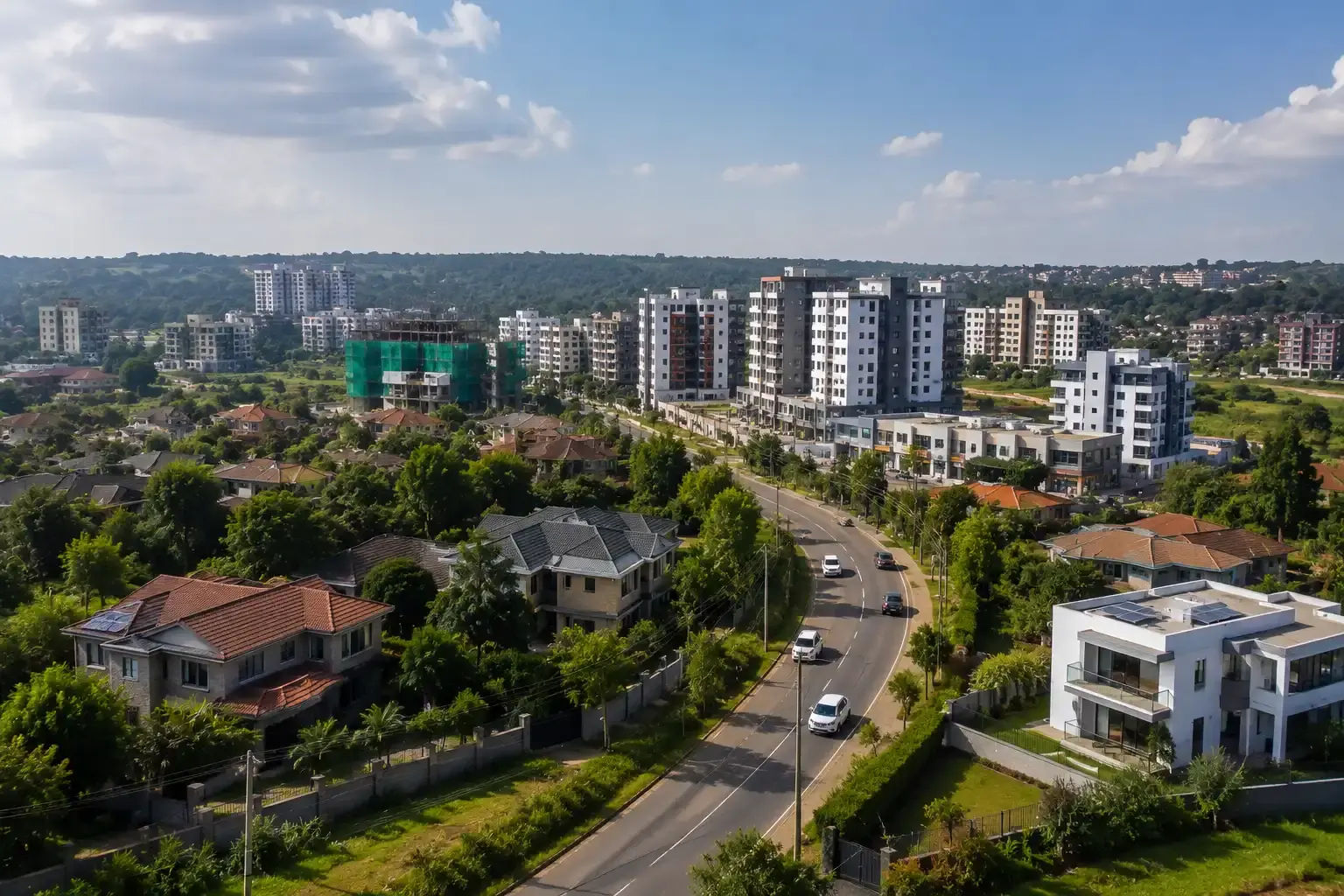
A decade ago, Ruaka was mostly agricultural land on the fringes of Nairobi. Today, it's one of the most active apartment markets in the entire Nairobi Metropolitan Area — a dense corridor of high-rise developments anchored by Two Rivers Mall, East and Central Africa's largest shopping centre. For buyers and investors, Ruaka's transformation raises an obvious question: is this rise sustainable, or has the area already peaked?
Here's an honest look at what's driving Ruaka's growth, what it costs, and what to watch out for.
Where Ruaka Sits — and Why That Matters
Officially part of Kiambu County (Karuri Municipality, Kiambaa Sub-County), Ruaka sits within the Nairobi Metropolitan Area, just off Limuru Road and the Northern Bypass. Its defining advantage is proximity: Westlands and Gigiri are roughly 10–20 minutes away off-peak (25–45 minutes during peak hours) — a dramatically shorter commute than other satellite towns like Ruiru (30–60 minutes) or Kitengela (60–120 minutes).
For anyone working in Westlands, Gigiri, or the diplomatic and UN circuit, that commute advantage alone explains much of Ruaka's appeal over more distant, cheaper alternatives.
What's Driving the Growth
- Two Rivers Mall — a major anchor amenity that transformed Ruaka's retail and lifestyle profile almost overnight
- Northern Bypass access — significantly easing the commute into Westlands and central Nairobi
- Population growth — the broader Karuri area recorded over 194,000 residents at the last census, with projections putting it well past 217,000 in recent years
- Affordable entry prices relative to central Nairobi — apartments starting from roughly KSh 2.5 million for studios, considerably below comparable units in Westlands or Kilimani
Ruaka Property Prices in 2026
For sale:
- Studio apartments: from approximately KSh 2.5 million
- 1-bedroom apartments: roughly KSh 4–5.5 million
- 2-bedroom apartments: roughly KSh 5.5–8 million
For rent:
- Apartments generally range from around KSh 25,000 to KSh 120,000/month, with averages commonly cited around KSh 45,000–110,000 depending on size, finishes, and building quality
- Bedsitters and smaller units can be found from as low as KSh 8,000–18,000/month in more basic buildings
Land: Ruaka's land story is the most dramatic part of its growth — an acre now averages roughly KSh 111.7 million, having nearly doubled over the past decade and now exceeding prices in some established suburbs like Runda.
The Investment Case: Rental Yields
Ruaka has consistently delivered some of the strongest rental yields in the Nairobi Metropolitan Area. Recent market data puts unfurnished apartment yields at roughly 7–10% gross, with some analyses citing Ruaka as the single top-performing node in the NMA for total returns — ahead of established suburbs like Kilimani (6–7.5%) and well ahead of premium areas like Karen (3–5%).
For investors comparing hands-on ownership against more passive real estate exposure, it's worth weighing this kind of direct-market performance against alternatives like REITs — see our comparison in REITs vs direct property ownership in Kenya for a fuller picture of both approaches.
The Catch: Oversupply Risk
Ruaka's rapid rise hasn't been without growing pains. The generic mid-range apartment segment — standard 2-bedroom units without distinguishing features — has faced real oversupply pressure, putting downward pressure on rents for undifferentiated stock. Successful investment in Ruaka increasingly requires targeting differentiated properties: furnished units for short-term rental demand, premium amenities, or finishes that appeal specifically to the area's expat and diplomatic tenant pool.
In other words, simply buying "a 2-bedroom in Ruaka" no longer guarantees the strong returns the area built its reputation on — the specific building, finishes, and positioning now matter considerably more than they did a few years ago.
Is Ruaka Still the Best Opportunity, or Has It Peaked?
This is the honest question serious investors are asking. Ruaka's land prices have appreciated so significantly that some analysts now point to neighbouring areas — Ndenderu, Banana, and parts of Limuru — as the next growth corridor, following a similar trajectory to what Ruaka experienced a decade ago but at considerably lower entry prices today.
This doesn't mean Ruaka is a poor investment — its infrastructure, amenities, and commute advantage are now firmly established, which is itself a form of security many emerging areas lack. But it does mean buyers should go in with clear eyes about where in the growth cycle the area currently sits, and consider watching neighbouring areas for the next opportunity.
Who Should Consider Ruaka?
- Renters wanting Westlands-adjacent convenience at a lower rent than Westlands itself
- Investors seeking strong rental yields, provided they target differentiated, well-positioned units rather than generic stock
- Families wanting access to good schools (Rosslyn Academy and others nearby), malls, and green space (Karura Forest) without a central Nairobi price tag
- Buyers priced out of Westlands or Kilimani but wanting a similar lifestyle and commute profile
Explore Ruaka Listings with Masion
Whether you're looking to rent, buy, or invest, Masion lists verified properties across Ruaka and the wider Nairobi Metropolitan Area — helping you find the differentiated, well-positioned units that continue to perform in this fast-evolving market.
Browse Ruaka listings today at masion.co.ke.
FAQs
1. Is Ruaka still a good investment in 2026, or has it already peaked? Ruaka's infrastructure and amenities are well-established, and yields remain strong, but the generic mid-range apartment segment faces oversupply pressure. Targeting differentiated, well-finished units — rather than standard stock — remains key to strong returns.
2. How does Ruaka compare to Westlands for renters? Ruaka offers a similar commute advantage to Westlands and Gigiri at a noticeably lower rent, making it attractive to renters who want proximity to these employment hubs without paying Westlands-level prices.
3. What's driving Ruaka's rental yields so high? Strong demand from young professionals, relatively affordable entry prices for the location, and proximity to major employment hubs like Westlands and Gigiri all contribute to yields that have outperformed many established Nairobi suburbs.
4. Are there cheaper alternatives to Ruaka with similar growth potential? Some analysts point to neighbouring areas like Ndenderu, Banana, and parts of Limuru as potential "next Ruaka" corridors, offering lower entry prices with a similar growth trajectory, though with correspondingly higher uncertainty.
5. What should I avoid when buying an apartment in Ruaka? Be cautious of generic, undifferentiated 2-bedroom units in oversupplied buildings, which have faced downward rental pressure. Prioritize properties with distinguishing features — better finishes, amenities, or furnished options — over the cheapest available unit.
6. Is Ruaka considered part of Nairobi or Kiambu County? Ruaka is officially part of Kiambu County, within the Karuri Municipality, though it functions closely as part of the wider Nairobi Metropolitan Area given its proximity and commuter relationship to the city.
A little more clarity
Frequently asked questions
What does this article cover?
A decade ago, Ruaka was mostly agricultural land on the fringes of Nairobi. Today, it's one of the most active apartment markets in the entire Nairobi Metropolitan Area — a dense corridor of high-rise developments anchored by Two Rivers Mall, East and Central Africa's largest shopping centre. For buyers and investors, Ruaka's transformation raises an obvious question: is this rise sustainable, or
How can I find properties related to my requirements?
Browse the property listings and filter by location, price, and property type. You can also use Request a Property to share your requirements and receive matching suggestions.
How can I ask about a property?
Open the property page to review its details and contact the listing agent using the enquiry options shown there. Confirm availability and arrange a viewing with the agent.
Join the conversation
Comments
Looking for a property?Get help with a request tailored to your location and budget.
No comments yet. Share a thought or ask a question above.