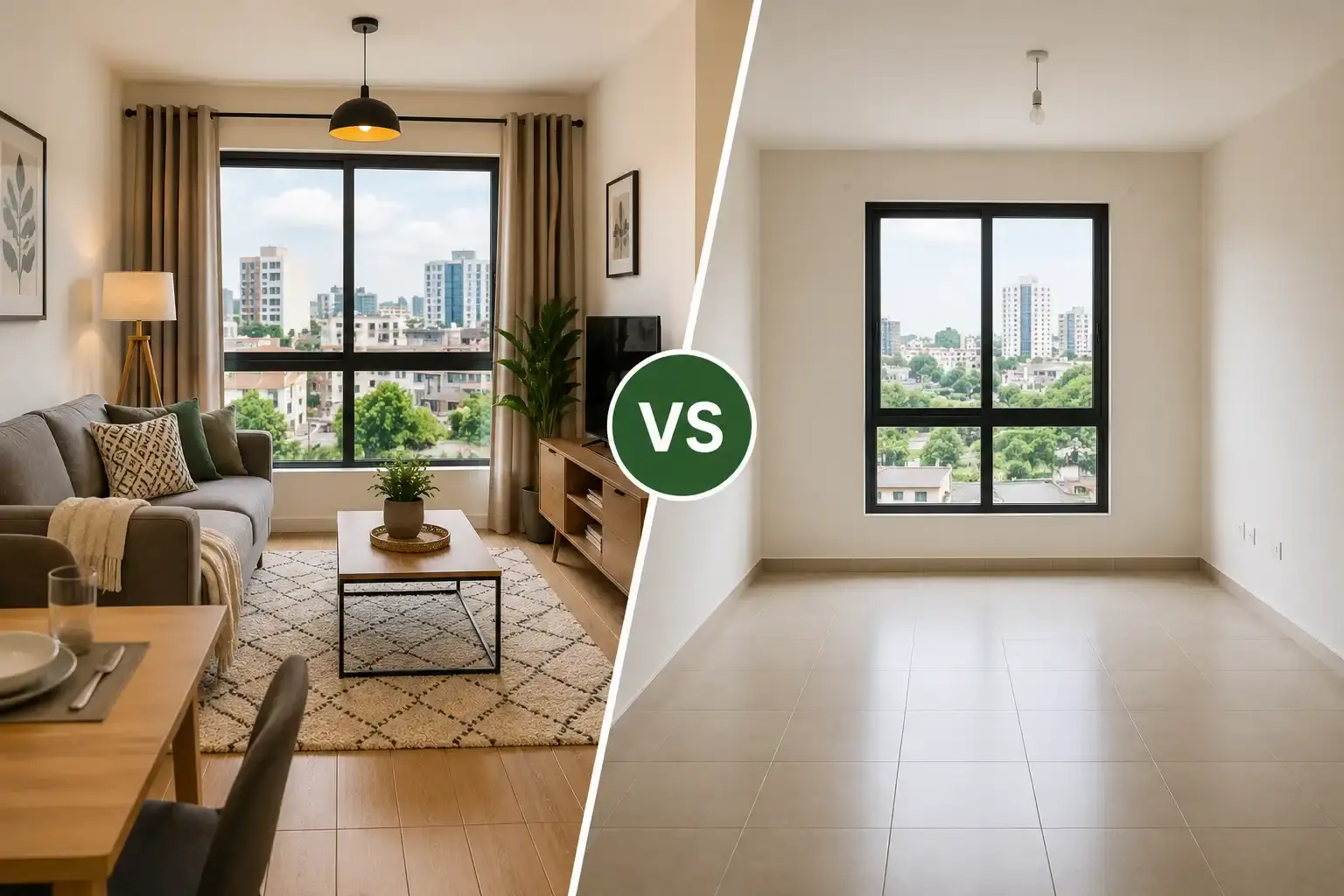
One of the first decisions you'll face when apartment hunting in Nairobi is whether to go furnished or unfurnished. It seems like a simple preference, but it actually affects your monthly budget, how quickly you can move in, how much flexibility you have, and how "settled" the space will ultimately feel. Here's a clear breakdown to help you decide which makes more sense for your situation.
What "Furnished" Actually Means in Nairobi
Furnished apartments in Nairobi vary quite a bit in what's actually included, so it's worth clarifying before signing anything:
- Fully furnished — beds, sofas, dining sets, kitchen appliances, and often even cookware, linens, and décor
- Semi-furnished — typically major items like beds, wardrobes, and a sofa, but not smaller appliances or kitchenware
- Unfurnished — a bare shell, sometimes without even basic fittings like curtain rails or light fixtures
Always ask for a specific, written inventory of what's included before assuming a "furnished" listing meets your expectations.
The Case for Furnished Apartments
1. Move-In Convenience
This is the biggest draw. You can move in with little more than your personal belongings, without the cost, time, or hassle of sourcing furniture — particularly valuable for anyone relocating from another city or country, or moving somewhere temporarily for work.
2. No Upfront Furniture Investment
Furnishing an entire apartment from scratch is a significant upfront cost. A furnished rental avoids this entirely, which can make sense for shorter stays or for renters who'd rather not tie up capital in furniture they may not want to keep long-term.
3. Ideal for Short-Term Stays
If you're renting for under a year — a work contract, a temporary relocation, or simply testing out a neighbourhood before committing longer-term — furnished apartments remove the burden of buying and then reselling or transporting furniture for a short stay.
4. Common in Serviced and Corporate Rentals
Many serviced apartments, popular with expats, diplomats, and corporate tenants, come furnished as standard, often bundled with amenities like cleaning services, security, and utilities — a full "move-in ready" package aimed at convenience over cost savings.
The Case for Unfurnished Apartments
1. Significantly Lower Rent
Furnished apartments typically command a noticeably higher monthly rent than comparable unfurnished units — often 20–40% more, depending on the quality of furnishings and the building. For long-term renters, this difference adds up substantially over time.
2. Freedom to Personalize
An unfurnished apartment is a blank canvas. You choose every piece — the style, the quality, the layout — creating a space that genuinely reflects your taste rather than adapting to a landlord's furniture choices, which are sometimes dated or mismatched.
3. Better Long-Term Value
If you're planning to stay for a year or more, buying your own furniture (even gradually) is usually more cost-effective than paying the ongoing furnished-rental premium — and unlike rent, furniture you buy is an asset you keep when you move.
4. More Common and More Choice
Unfurnished apartments make up the majority of Nairobi's long-term rental market, meaning renters generally have significantly more options — across price points, buildings, and neighbourhoods — when searching unfurnished versus furnished specifically.
A Side-by-Side Comparison
| Furnished | Unfurnished | |
|---|---|---|
| Monthly rent | Higher (often 20–40% more) | Lower |
| Move-in speed | Immediate | Requires furniture sourcing/setup |
| Upfront costs | Lower (no furniture purchase) | Higher (furniture investment) |
| Personalization | Limited to landlord's choices | Full control |
| Best for | Short stays, relocations, corporate tenants | Long-term renters, families settling in |
| Availability | More limited, often serviced apartments | Wider selection across the market |
Questions to Ask Before Deciding
- How long do I plan to stay? Under a year generally favors furnished; over a year usually favors unfurnished on cost grounds.
- Do I already own furniture, or would I need to buy everything? If you're relocating with existing furniture, unfurnished becomes more practical immediately.
- What's my monthly budget versus my available upfront capital? Furnished trades a higher monthly cost for lower upfront spending; unfurnished does the reverse.
- How important is personalizing the space to me? If styling your own home matters to you, unfurnished offers far more room to do that — see our tips on budget-friendly ways to style a rental apartment for ideas that work within a lease.
- Am I moving for work on a fixed, shorter contract? Furnished options tend to suit fixed-term relocations better than open-ended, long-term plans.
A Middle Ground: Semi-Furnished
If neither option feels quite right, semi-furnished apartments — typically including major items like beds and a sofa, but leaving smaller furnishings and décor to you — offer a practical middle ground: lower move-in cost than fully furnished, but less upfront investment than starting from a completely empty apartment.
Find the Right Fit with Masion
Whether you're looking for a fully furnished serviced apartment or an unfurnished long-term rental to make your own, Masion lists verified properties across Nairobi with clear details on what's included — so you can compare confidently before you commit.
Browse furnished and unfurnished rentals at masion.co.ke.
FAQs
1. How much more expensive is a furnished apartment compared to unfurnished? Furnished apartments in Nairobi typically cost around 20–40% more per month than a comparable unfurnished unit, depending on the quality and completeness of the furnishings.
2. Is furnished always better for short-term stays? Generally, yes — for stays under a year, avoiding the cost and hassle of buying and later disposing of furniture usually makes furnished the more practical and cost-effective choice.
3. What does "semi-furnished" actually include? It varies by landlord, but semi-furnished typically means major items like a bed, wardrobe, and sofa are included, while smaller furnishings, kitchenware, and décor are left to the tenant. Always request a specific written inventory.
4. Can I negotiate rent on a furnished apartment if I bring my own furniture? It's worth asking — some landlords may be open to storing their furniture elsewhere and adjusting rent slightly, though this varies significantly by landlord and isn't guaranteed.
5. Are unfurnished apartments easier to find in Nairobi? Yes, unfurnished apartments make up the majority of Nairobi's long-term rental market, generally offering renters more choice across price points and neighbourhoods compared to furnished options.
6. Is it cheaper to buy furniture myself than pay for a furnished apartment long-term? For long-term stays (a year or more), buying your own furniture — even gradually — is usually more cost-effective overall than paying the ongoing furnished-rental premium, and you keep the furniture as an asset when you move.
A little more clarity
Frequently asked questions
What does this article cover?
One of the first decisions you'll face when apartment hunting in Nairobi is whether to go furnished or unfurnished. It seems like a simple preference, but it actually affects your monthly budget, how quickly you can move in, how much flexibility you have, and how "settled" the space will ultimately feel. Here's a clear breakdown to help you decide which makes more sense for your situation.
How can I find properties related to my requirements?
Browse the property listings and filter by location, price, and property type. You can also use Request a Property to share your requirements and receive matching suggestions.
How can I ask about a property?
Open the property page to review its details and contact the listing agent using the enquiry options shown there. Confirm availability and arrange a viewing with the agent.


Join the conversation
Comments
Looking for a property?Get help with a request tailored to your location and budget.
No comments yet. Share a thought or ask a question above.