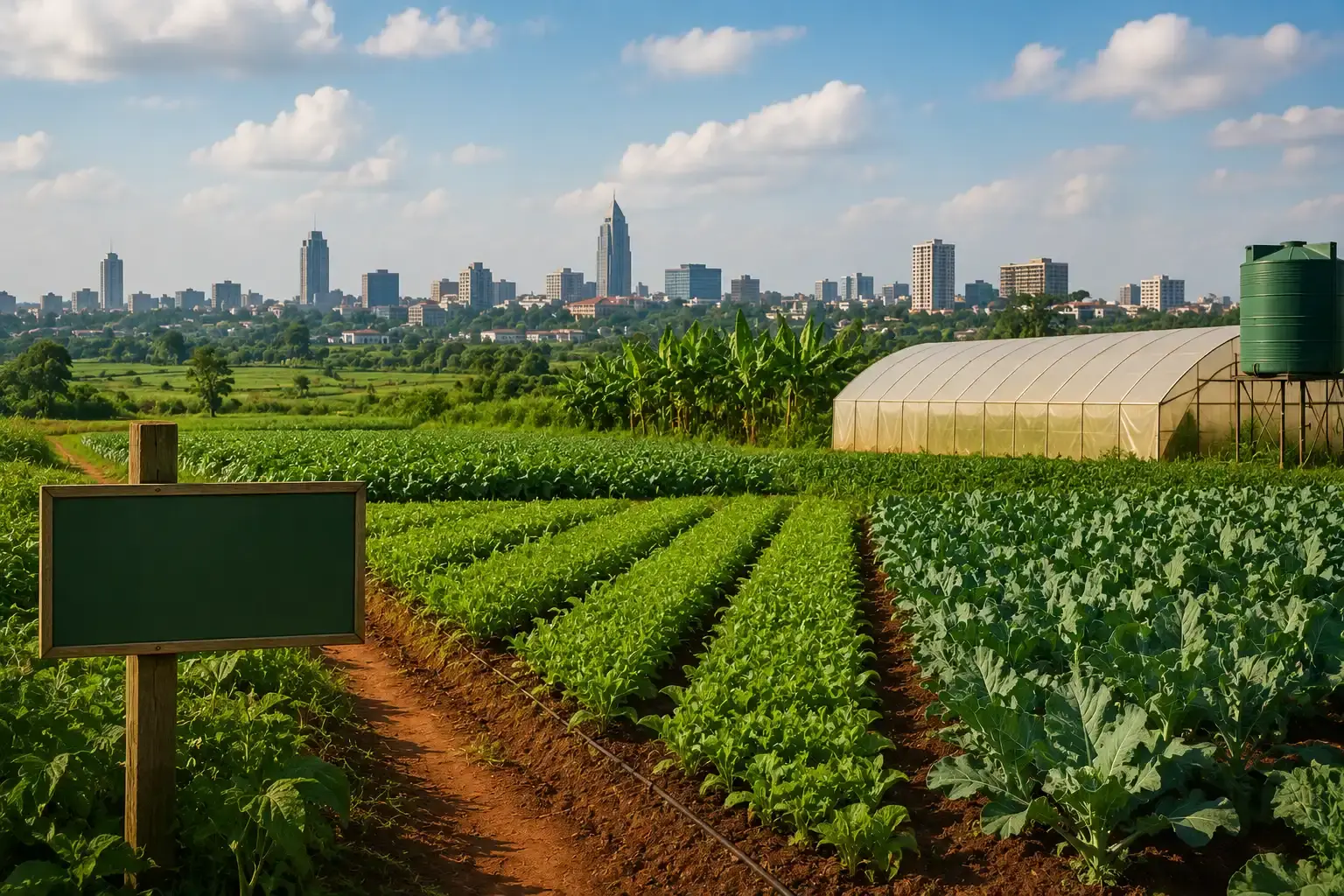
Nairobi's population keeps growing, and so does its appetite for fresh produce, dairy, and horticultural exports — creating steady, built-in demand for anyone farming close enough to supply it. Combined with land values that have been climbing steadily in Nairobi's surrounding counties, agribusiness land has become one of the more compelling investment categories for Kenyans looking beyond residential property or straightforward land banking.
Here's a practical look at where to buy, what it costs, what to grow, and what to check before you commit.
Why Agribusiness Land Near Nairobi Makes Sense
Nairobi and its metropolitan area represent Kenya's largest concentrated consumer market, with a rapidly growing population creating consistent demand for food that has to come from somewhere reasonably close by. Land near Nairobi offers investors several ways to generate value:
- Direct farming income — growing high-value crops (French beans, passion fruits, strawberries, herbs) for supermarkets, exporters, and hotels
- Leasing to active farmers — many smallholder farmers rent rather than own the land they cultivate, offering landowners a passive income stream
- Long-term capital appreciation — land in areas like Ruiru and Juja, once considered too far from the city, has appreciated significantly as urban development has expanded outward over the past decade
- Government support — there has been growing policy focus on peri-urban and urban agriculture as part of national food security efforts, alongside expanded agricultural land financing options from mortgage and lending institutions
Best Areas for Agribusiness Land Near Nairobi
Kiambu County — Widely regarded as premium agricultural territory, with reliable water access, fertile soils, and proximity to major highways. Farms here often come with irrigation infrastructure already in place, particularly around Limuru and Tigoni, which specialize in tea and flower farming.
Ruiru and Juja — Well-connected farming zones along Thika Road, increasingly popular for greenhouse operations supplying supermarkets and hotels. Good road access and distribution networks make these areas practical for commercial-scale horticulture.
Limuru — Known for its cooler climate and fertile soils, well suited to tea, flowers, and certain horticultural crops, with established agricultural infrastructure.
Kajiado County — Particularly the areas extending toward Ngong and beyond, offers grazing land suited to livestock — cattle, dairy, and mixed livestock operations serving Nairobi's meat and milk demand.
Machakos — Especially outer Machakos, offers more affordable entry-level farmland with solid agricultural potential, appealing to investors prioritizing value over immediate premium infrastructure.
Thika Road corridor — Combines road access with a growing distribution network, useful for operations that need to move produce into Nairobi markets quickly and reliably.
What It Costs: A Rough Price Guide
Prices vary enormously based on location, soil quality, water access, and infrastructure, but as a general guide:
- Entry-level farmland (outer Machakos, northern Kajiado): more affordable, though further from Nairobi's core distribution networks
- Mid-range agricultural land (Ruiru, Juja, along Thika Road): moderately priced, with the advantage of established road access and proximity to markets
- Premium agricultural land (Kiambu County, particularly with irrigation and greenhouse infrastructure already in place): commands the highest per-acre values, reflecting reliable water access and fertile soils
Smaller subdivided plots (an eighth or quarter acre) in peri-urban satellite areas like Kikuyu, Ngong, and parts of Kiambu are also available at lower entry points for those looking to start smaller before scaling up.
What to Grow: Matching Crops to Land and Market
- Horticulture and vegetables (French beans, herbs, leafy greens) — strong demand from Nairobi supermarkets and exporters, often suited to smaller, well-irrigated plots
- Fruits (passion fruit, strawberries, avocados) — growing export and domestic demand, with avocado in particular seeing strong interest from investors in areas like Nyandarua and Kiambu
- Flowers — established industry around Limuru and Tigoni, benefiting from cooler highland climates
- Greenhouse operations — increasingly common around Ruiru and Juja, allowing controlled, higher-yield production regardless of season
- Livestock (dairy, beef, poultry) — well suited to larger parcels in Kajiado and similar areas with grazing land
Legal and Due Diligence Steps
Buying agricultural land carries the same fraud risks as any Kenyan land purchase, and due diligence should never be skipped:
- Conduct an independent land search at the Ministry of Lands or via Ardhisasa to confirm the registered owner and check for disputes or caveats
- Verify water rights and access — especially important for agribusiness, since water availability directly determines what you can grow and how reliably
- Check zoning and land use classification to confirm the parcel is legitimately designated for agricultural use
- Engage a qualified lawyer to review documents and guide the transaction
- Physically visit the land and confirm boundaries match the survey plan and title deed
For a fuller breakdown of common land fraud patterns to watch for, see our guide on how to spot a fraudulent land sale in Kenya.
Financing and Investment Structure
Access to agricultural land financing has expanded in recent years, with some mortgage refinancing institutions extending their scope to cover farmland purchases — making it more feasible for ordinary investors to access loans rather than relying solely on cash purchases. For those wanting real estate exposure without directly managing a farm, it's also worth comparing this hands-on approach against more passive options like REITs, covered in our guide on REITs vs direct property ownership in Kenya.
Getting Started: A Practical Approach
- Decide whether you're farming actively, leasing to a tenant farmer, or land banking for appreciation
- Match your crop or livestock choice to the specific area's soil, climate, and water access
- Set a realistic budget and identify which price tier of land fits it
- Conduct full legal due diligence before any payment
- If leasing out or hiring farm management, put clear, written agreements in place from the start
Find Verified Agricultural Land with Masion
Agribusiness land is only as good an investment as the due diligence behind it. At Masion, we list verified land parcels across Nairobi's surrounding counties — from entry-level plots to premium irrigated farmland — helping you invest with confidence.
Browse agricultural land listings today at masion.co.ke.
A little more clarity
Frequently asked questions
What does this article cover?
Nairobi's population keeps growing, and so does its appetite for fresh produce, dairy, and horticultural exports — creating steady, built-in demand for anyone farming close enough to supply it. Combined with land values that have been climbing steadily in Nairobi's surrounding counties, agribusiness land has become one of the more compelling investment categories for Kenyans looking beyond residen
How can I find properties related to my requirements?
Browse the property listings and filter by location, price, and property type. You can also use Request a Property to share your requirements and receive matching suggestions.
How can I ask about a property?
Open the property page to review its details and contact the listing agent using the enquiry options shown there. Confirm availability and arrange a viewing with the agent.


Join the conversation
Comments
Looking for a property?Get help with a request tailored to your location and budget.
No comments yet. Share a thought or ask a question above.