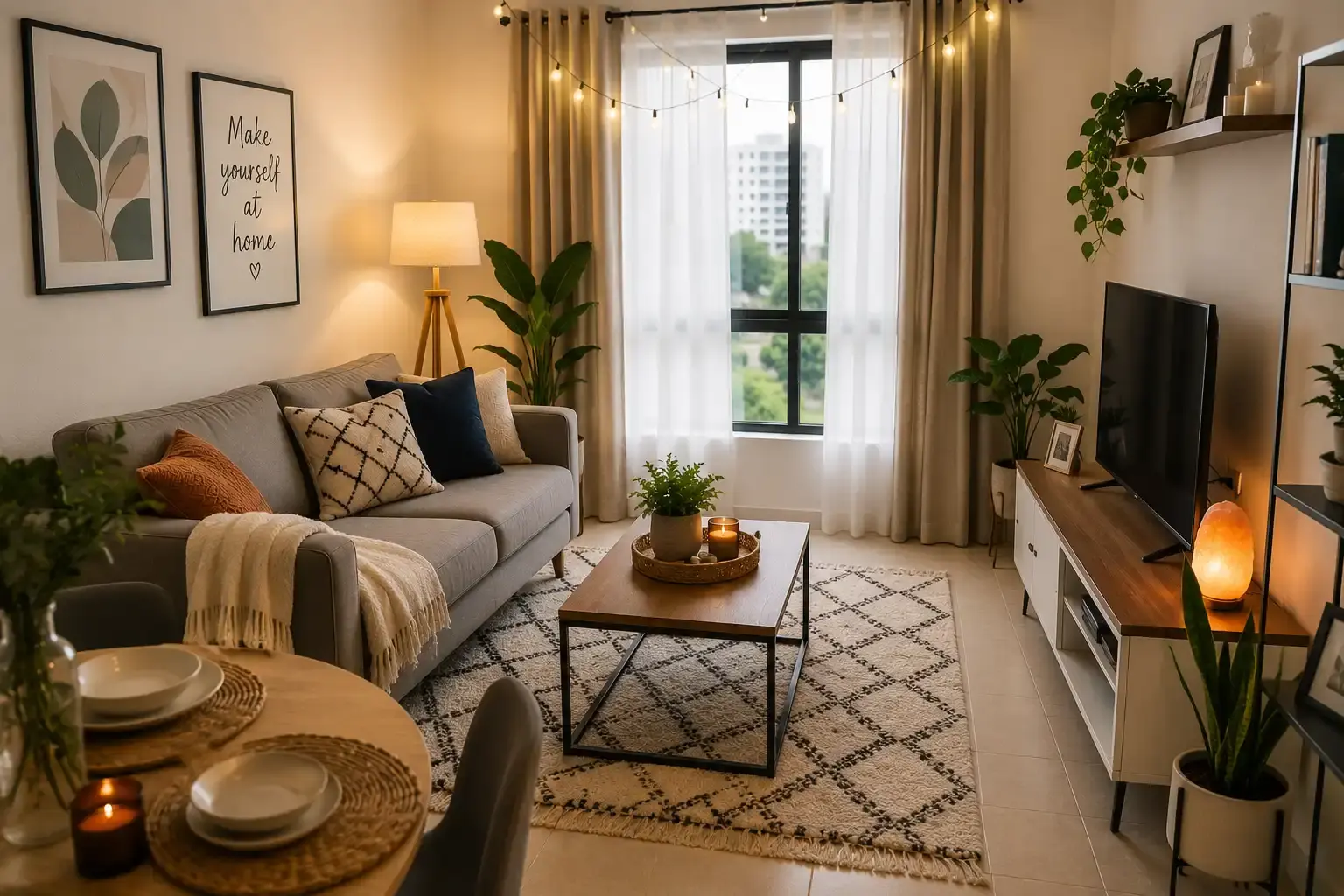
One of the trickiest parts of renting is wanting a space that genuinely feels like yours — without risking your deposit or violating lease terms that restrict permanent changes. The good news: making a rental feel personal and lived-in doesn't require paint, drilled-in shelving, or anything your landlord would object to. It just requires a bit of creativity around what "temporary" can actually look like.
Here's how to make a rental feel like home while staying entirely lease-compliant.
1. Know Your Lease Before You Start
Before making any changes, however small, read your lease terms around alterations. Most leases restrict permanent changes — painting, drilling, structural modifications — but are silent or permissive on genuinely removable additions. Knowing exactly where the line sits prevents any unpleasant surprises at move-out, and gives you confidence to personalize within those boundaries.
2. Use Removable Wall Solutions Instead of Paint or Nails
Bare walls are often the biggest culprit behind a rental feeling impersonal — but you don't need paint or nails to fix that:
- Command strips and adhesive hooks hold artwork, mirrors, and light décor securely, and remove cleanly without damaging paint
- Removable wallpaper or decals add pattern and personality to an accent wall, without the commitment (or mess) of actual paint
- Fabric or tapestry wall hangings add color and texture and can simply be taken down and rehung elsewhere later
- Washi tape can create simple geometric wall art or borders, fully removable when you move
3. Let Textiles Do the Heavy Lifting
Curtains, rugs, cushions, and throws are some of the most effective (and fully portable) ways to personalize a space. They add color, texture, and warmth instantly, and they move with you to your next home — making them a genuine long-term investment rather than a temporary fix.
4. Bring In Furniture and Storage You Choose Yourself
Even in a furnished rental, adding a few pieces you've selected yourself — a favorite armchair, a bookshelf, a specific style of storage — creates a stronger sense of ownership over the space than relying entirely on what came with the apartment.
5. Use Lighting to Change the Mood Entirely
Swapping harsh overhead lighting for warmer floor lamps, table lamps, or battery-operated string lights is one of the simplest ways to transform how a space feels, without touching any wiring or fixtures. This kind of lighting is also fully portable when you move.
6. Add Plants for Life and Personality
A few well-placed plants — on windowsills, shelves, or in room corners — instantly make a space feel warmer and more lived-in. Low-maintenance options are widely available locally and inexpensive, and unlike wall decor, they add a genuinely different sensory dimension (color, texture, even scent) that flat decor can't replicate.
7. Personalize with What You Already Own
Family photos, books, travel souvenirs, or meaningful objects don't require any alteration to the space at all — simply displaying items that matter to you does more to make a rental feel like home than most purchased decor ever could. A gallery of framed photos, hung with removable strips, is a particularly effective example.
8. Use Freestanding Room Dividers for Zoning or Privacy
If your rental is an open studio or you want to create a sense of separation between areas, a freestanding screen or bookshelf can define zones without any permanent alteration — and unlike a built wall, it can be repositioned or taken with you entirely.
9. Upgrade Fixtures Temporarily, Then Restore Them at Move-Out
Some renters choose to swap out things like cabinet handles, light fixture covers, or a shower head — provided the lease allows it — as long as they keep the original fixtures to reinstall before moving out. This is a more involved approach and should only be attempted with clear landlord permission, but it can meaningfully change how "dated" or "generic" certain fixtures make a space feel.
10. Keep a "Move-Out Box"
As you personalize your space, keep a labeled box with anything you remove (original curtain rods, cabinet handles, fixture covers) so restoring the apartment to its original condition at move-out is simple and stress-free — protecting your deposit while still letting you enjoy a personalized space during your tenancy.
A Quick Reference: Safe vs Risky Changes
| Generally Safe | Needs Landlord Permission First |
|---|---|
| Command strip artwork/mirrors | Painting walls |
| Removable wallpaper/decals | Drilling permanent shelving |
| Rugs, curtains, cushions | Structural changes |
| Freestanding furniture | Replacing fixed fixtures permanently |
| Battery-operated string lights | Any electrical or plumbing changes |
| Plants and portable décor | Wallpaper requiring adhesive that damages paint |
When in doubt, ask your landlord directly — a quick conversation is far less costly than a disputed deposit deduction at move-out.
Find a Rental Worth Personalizing
A great personalization project starts with the right space. Whether you're looking for a studio, a family apartment, or something in between, Masion lists verified rental properties across Kenya to help you find a home worth making your own.
Browse current rental listings at masion.co.ke.
FAQs
1. Will command strips really not damage paint? Quality command strips are designed to remove cleanly from most painted walls when removed correctly (slowly, at the recommended angle), though it's worth testing on a small, inconspicuous area first if you're unsure about your specific wall finish.
2. Can I paint a rental if I promise to repaint it back before moving out? Only with explicit landlord permission — most leases prohibit painting without prior approval, and repainting back to the exact original color can be harder to match perfectly than expected.
3. What's the safest way to add personality to a rental without any risk to my deposit? Textiles (curtains, rugs, cushions), freestanding furniture, plants, and command-strip-mounted decor are generally the lowest-risk options, since none require permanent alteration to the space.
4. Should I get permission in writing before making changes to a rental? Yes, ideally — a quick written confirmation (even a text message) from your landlord for any change beyond the clearly "safe" category protects both parties and avoids disputes later.
5. Do landlords in Kenya typically allow removable wallpaper or decals? It varies by landlord, so it's worth asking directly, though these are generally viewed as lower-risk than paint since quality removable products don't damage the underlying wall when applied and removed correctly.
6. What should I keep track of to protect my deposit while personalizing my rental? Keep a labeled box with any original fixtures or hardware you temporarily replace (with permission), and take photos of the apartment's original condition when you move in — both make restoring the space straightforward at move-out.
A little more clarity
Frequently asked questions
What does this article cover?
One of the trickiest parts of renting is wanting a space that genuinely feels like yours — without risking your deposit or violating lease terms that restrict permanent changes. The good news: making a rental feel personal and lived-in doesn't require paint, drilled-in shelving, or anything your landlord would object to. It just requires a bit of creativity around what "temporary" can actually loo
How can I find properties related to my requirements?
Browse the property listings and filter by location, price, and property type. You can also use Request a Property to share your requirements and receive matching suggestions.
How can I ask about a property?
Open the property page to review its details and contact the listing agent using the enquiry options shown there. Confirm availability and arrange a viewing with the agent.

Join the conversation
Comments
Looking for a property?Get help with a request tailored to your location and budget.
No comments yet. Share a thought or ask a question above.