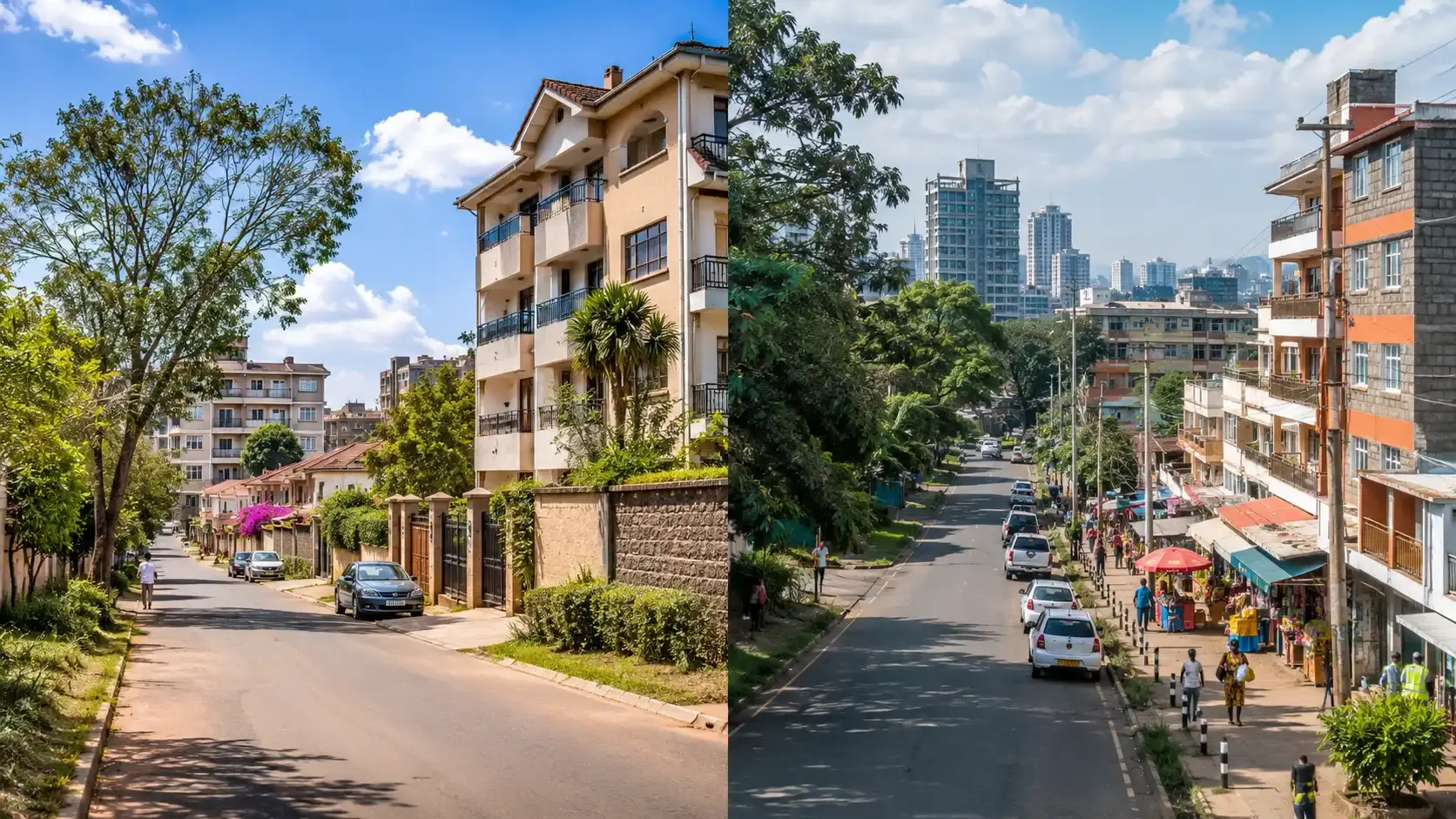
While Nairobi's property conversation often centers on Kilimani, Westlands, and Karen, two long-established neighbourhoods just south of the CBD quietly continue delivering solid value, strong rental demand, and genuine middle-class stability: South B and South C. Sitting side by side, separated by Mombasa Road, they're often mentioned together — but they're meaningfully different neighbourhoods with distinct character, pricing, and buyer profiles.
Location and Layout
South B and South C sit roughly 3–8km southeast of Nairobi's CBD, with South B lying east of Mombasa Road — closer to the CBD at around 3km — and South C sitting west of Mombasa Road, bordering both Nairobi National Park and Wilson Airport.
This geography defines much of their difference in character. South B's proximity and denser layout give it a livelier, more commercial feel, with active nightlife and street-level business activity. South C's position bordering the National Park gives it a noticeably quieter, more suburban atmosphere, with larger plots and lower density than its neighbour.
Rental Prices as of 2026
South B:
- Bedsitters: roughly KSh 10,000–15,000/month
- 1-bedroom apartments: roughly KSh 20,000–35,000/month
- 2-bedroom apartments: roughly KSh 28,000–45,000/month
- 3-bedroom apartments or maisonettes: roughly KSh 37,000–60,000/month
- Premium furnished units in established estates (such as Plainsview) can command notably more
South C:
- Rental prices generally run 15–30% higher than comparable South B properties, reflecting its lower density and larger plot sizes
- Average listed rents across property types commonly fall in the KSh 30,000–150,000/month range depending on unit size and finishes
- For-sale properties in South C carry a considerably wide range, from smaller apartments to substantial standalone homes, with average asking prices reflecting the area's mix of apartment and larger house stock
Who Each Neighbourhood Suits Better
South B tends to suit: young professionals and renters prioritizing a shorter commute, active street life, and more affordable rental options relative to South C, without needing the quiet or space South C offers.
South C tends to suit: families and homeowners prioritizing more space, a quieter residential environment, and proximity to Nairobi National Park and Wilson Airport, and who are willing to pay a premium for that lower density.
The Nairobi National Park Advantage
South C's border with Nairobi National Park is a genuinely unique amenity that can't be replicated as the city continues to densify — a rare pocket of accessible wilderness within Nairobi's boundaries. As Nairobi grows and green space becomes scarcer across the city, this proximity is likely to become an increasingly valuable differentiator for South C specifically.
What's Changing in Both Neighbourhoods
South B has seen accelerated apartment construction in recent years, as developers convert older plots into higher-density towers. This has kept South B relatively affordable and rental stock plentiful, but it also introduces a real oversupply risk worth watching — each new building adds units to an already competitive rental market, which could compress achievable rents and yields if supply continues outpacing demand growth.
South C is going through its own transition, with the redevelopment of older estates like Mugoya changing the neighbourhood's character in places. Properties adjacent to active construction may see temporarily reduced rental appeal or value until redevelopment completes.
Broader market timing: Kenya's property market has historically seen some slowdown in transaction volumes in the run-up to general elections — worth factoring into timing considerations for both buying and selling in the latter half of 2026 and into 2027.
Investment Considerations
South B's continued apartment development keeps entry prices relatively accessible and rental demand from young professionals steady, though investors should factor in the oversupply risk when evaluating specific buildings — newer, well-differentiated units are likely to hold rental value better than generic stock in an increasingly competitive segment.
South C's appreciation has been steady, underpinned by its lower density and the enduring, non-replicable value of its National Park border — a structural advantage that tends to support longer-term price resilience, even amid neighbourhood redevelopment activity.
A Quick Decision Guide
Choose South B if: you want a shorter CBD commute, more affordable rent, and a livelier, more commercial neighbourhood feel.
Choose South C if: you prioritize space, quiet, and a genuine connection to green space, and your budget can absorb the 15–30% premium over comparable South B properties.
Explore South B and South C with Masion
Both neighbourhoods offer genuine value that's often overshadowed by Nairobi's more heavily marketed suburbs. At Masion, we list verified rental and sale properties across South B and South C to help you compare real, current options.
Browse South B and South C listings today at masion.co.ke.
FAQs
1. Is South C really more expensive than South B? Yes, generally — South C rental prices typically run 15–30% higher than comparable South B properties, reflecting its lower density, larger plots, and quieter residential character.
2. Which is better for a young professional working in the CBD: South B or South C? South B is generally the better fit — it's closer to the CBD, more affordable, and has a livelier commercial atmosphere suited to renters prioritizing convenience over space.
3. Is there an oversupply risk for apartments in South B? Yes, this is a genuine consideration — accelerated apartment construction in South B has increased rental stock significantly, which could put downward pressure on rents and yields if supply continues outpacing demand.
4. What makes South C's location unique compared to other Nairobi suburbs? Its direct border with Nairobi National Park offers a rare, permanent connection to green space and wildlife within city limits — an amenity that's becoming increasingly valuable as Nairobi's urban footprint continues to expand.
5. Should I expect property transactions to slow down before the 2027 election? Historically, Kenya's property market has seen some reduction in transaction volumes in the lead-up to general elections, so it's worth factoring this into your timing if you're planning to buy or sell in late 2026 or 2027.
6. Are South B and South C good for families? South C tends to suit families better, given its larger plot sizes, lower density, and quieter environment, while South B is generally better suited to individuals and young professionals prioritizing convenience and affordability.
A little more clarity
Frequently asked questions
What does this article cover?
While Nairobi's property conversation often centers on Kilimani, Westlands, and Karen, two long-established neighbourhoods just south of the CBD quietly continue delivering solid value, strong rental demand, and genuine middle-class stability: South B and South C. Sitting side by side, separated by Mombasa Road, they're often mentioned together — but they're meaningfully different neighbourhoods
How can I find properties related to my requirements?
Browse the property listings and filter by location, price, and property type. You can also use Request a Property to share your requirements and receive matching suggestions.
How can I ask about a property?
Open the property page to review its details and contact the listing agent using the enquiry options shown there. Confirm availability and arrange a viewing with the agent.

Join the conversation
Comments
Looking for a property?Get help with a request tailored to your location and budget.
No comments yet. Share a thought or ask a question above.