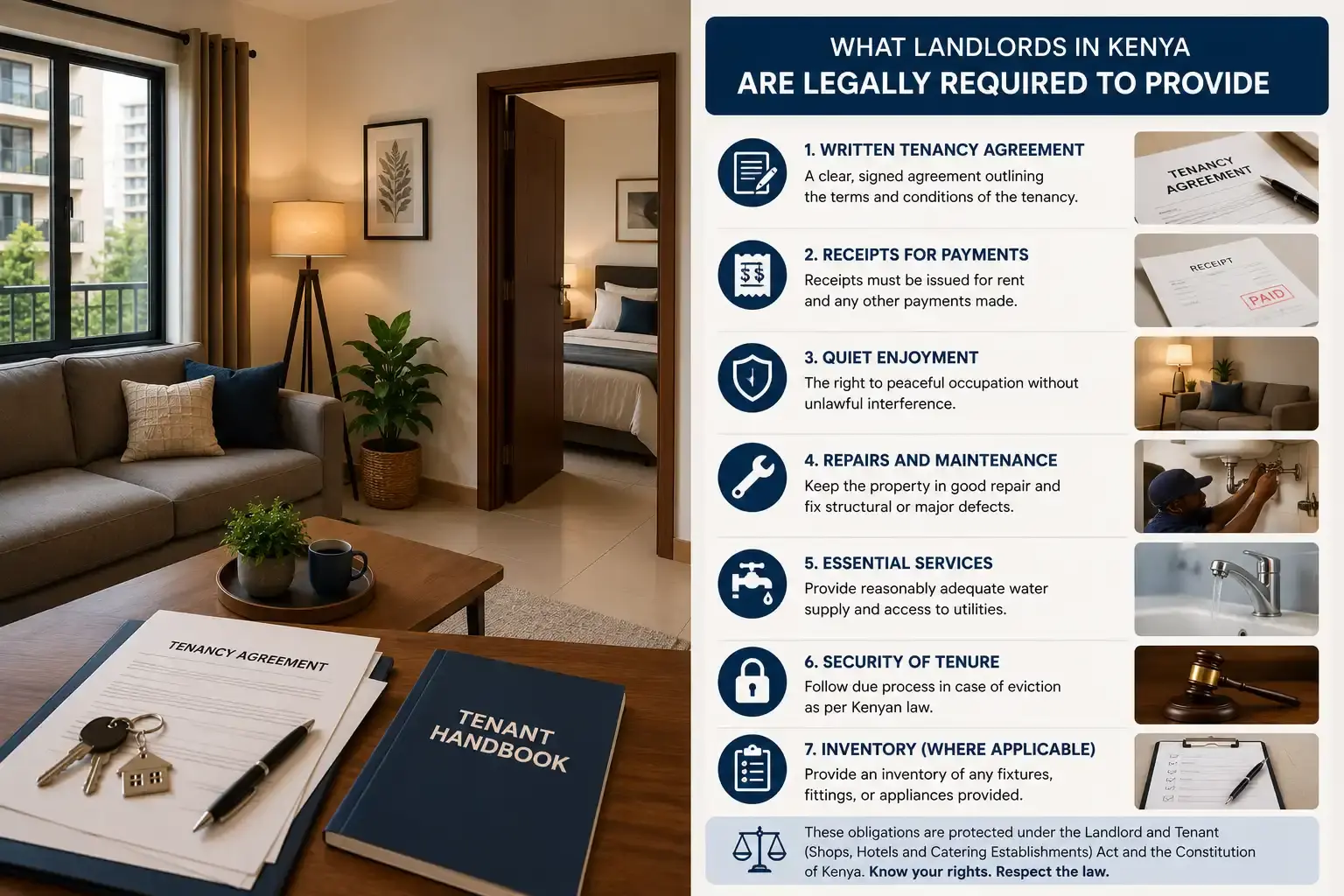
Many tenants in Kenya aren't entirely sure what their landlord is actually legally obligated to provide — and that uncertainty can lead to accepting substandard conditions, unreasonable rent increases, or improper eviction attempts without realizing there's recourse. Understanding the baseline legal obligations landlords carry helps both tenants and landlords navigate the relationship fairly and avoid disputes.
The Legal Framework
Landlord-tenant relationships in Kenya are governed primarily by:
- The Landlord and Tenant Act (currently under review, with proposed legislation aimed at modernizing and consolidating the law)
- The Rent Restriction Act, which applies specifically to certain lower-value residential tenancies
- General contract law, governing the specific terms agreed upon in individual tenancy agreements
- County government bylaws, which can add specific local requirements depending on the jurisdiction
Because Kenya's landlord-tenant legal framework has historically been somewhat fragmented and is subject to ongoing reform, the specific written tenancy agreement between landlord and tenant plays an unusually important role in defining the practical terms of the relationship — making it essential to read and understand this document carefully before signing.
What Landlords Are Generally Required to Provide
1. A Habitable, Safe Property
At a basic level, landlords are expected to provide housing that is structurally sound and safe for occupation — this includes functioning plumbing, electrical systems that meet basic safety standards, and a structure free from serious hazards that would make the unit genuinely unsafe or unfit to live in.
2. Essential Repairs and Maintenance
Landlords are generally responsible for maintaining the structural elements of the property and fixing issues that arise from normal wear and tear or pre-existing conditions — as opposed to damage caused by tenant negligence, which typically remains the tenant's responsibility.
3. Clear, Written Tenancy Terms
While Kenyan law doesn't universally mandate a written lease for every tenancy, having clear written terms — rent amount, payment schedule, deposit terms, notice periods, and specific responsibilities — protects both parties and is strongly recommended practice, particularly for higher-value tenancies.
4. Proper Notice Before Rent Increases
Landlords are expected to provide reasonable advance notice before increasing rent, rather than imposing sudden, immediate increases. The specific notice period can vary depending on the terms of the tenancy agreement and applicable regulations, so checking your specific lease terms matters here.
5. Proper Notice Before Termination or Eviction
Landlords cannot generally terminate a tenancy or evict a tenant without following proper legal process, including adequate notice. Kenyan law and court precedent have consistently emphasized that landlords must follow due process — self-help evictions (changing locks, removing belongings, or shutting off utilities without proper legal process) are not lawful, regardless of the underlying dispute.
6. Return of Security Deposit
Deposits are meant to cover legitimate damages beyond normal wear and tear, or unpaid rent — not to be withheld arbitrarily at the end of a tenancy. Landlords are generally expected to return the deposit (minus any legitimately deducted amounts, with an accounting of what was deducted and why) within a reasonable period after move-out.
7. Respect for the Tenant's Right to Quiet Enjoyment
Tenants are generally entitled to reasonable privacy and undisturbed use of the property during their tenancy — meaning landlords shouldn't enter the unit without reasonable notice (except in genuine emergencies) or otherwise interfere unreasonably with the tenant's use of the space.
What Landlords Are Generally NOT Required to Do
- Provide furnishings, unless specifically agreed to as part of the tenancy (a furnished rental)
- Cover the tenant's individual utility consumption, unless bundled into the agreed rent
- Make purely cosmetic upgrades or renovations during an active tenancy, absent a specific agreement to do so
- Renew a tenancy indefinitely — landlords generally retain the right not to renew a lease at the end of its term, provided proper notice is given according to the agreement's terms
What to Do If a Landlord Isn't Meeting Their Obligations
1. Document the issue clearly. Photos, dates, and written communication create a record that's useful if the situation escalates.
2. Raise the issue in writing first. A clear, professional written request (email or formal letter) gives the landlord a documented opportunity to address the problem before pursuing further action.
3. Reference your specific tenancy agreement. Many disputes come down to what the written agreement actually says — reviewing it carefully helps clarify whether a specific obligation was contractually agreed upon.
4. Understand your recourse if issues go unresolved. Depending on the severity and nature of the issue, tenants may have recourse through the Rent Tribunal (for applicable tenancies), small claims processes, or, for more serious disputes, formal legal action with the assistance of an advocate.
5. Avoid self-help remedies. Withholding rent unilaterally or making unauthorized deductions for repairs, without following proper process, can create legal exposure for the tenant as well — it's generally safer to pursue formal channels even when frustrated.
What Tenants Are Generally Responsible For
Understanding landlord obligations is only half the picture — tenants generally carry their own responsibilities, including paying rent on time, avoiding damage beyond normal wear and tear, using the property for its intended purpose, and providing reasonable notice before vacating. A fair, well-functioning tenancy relies on both parties meeting their respective obligations.
A Note on Ongoing Legal Reform
Kenya's landlord-tenant legal framework has been undergoing review, with proposed legislation aimed at consolidating and modernizing tenant protections and landlord obligations. Given this ongoing evolution, tenants and landlords alike should stay informed of legal updates, and consider consulting a lawyer for guidance on any significant dispute, since the specific applicable rules can shift as reforms progress.
Find Well-Managed Rentals Through Masion
A good tenancy starts with a transparent landlord and a clear agreement. At Masion, we list verified rental properties across Kenya and can connect you with reputable landlords and property managers who understand and respect their legal obligations.
Browse verified rental listings at masion.co.ke.
This article is for general informational purposes and does not constitute legal advice. Always consult a licensed advocate for guidance specific to your tenancy situation.
FAQs
1. Can a landlord evict a tenant without notice in Kenya? No. Proper legal process, including adequate notice, is required before terminating a tenancy or evicting a tenant. Self-help evictions — changing locks or removing belongings without following proper process — are not lawful.
2. Is a landlord required to return my full security deposit? Landlords are generally expected to return the deposit minus any legitimate deductions for damage beyond normal wear and tear or unpaid rent, along with an accounting of what was deducted and why.
3. How much notice must a landlord give before increasing rent? This depends on the specific terms of your tenancy agreement and applicable regulations, so it's important to review your lease for the specific notice period that applies to your situation.
4. Can my landlord enter my apartment whenever they want? Generally, no — tenants are entitled to reasonable privacy and undisturbed use of the property, meaning landlords should provide reasonable notice before entering, except in genuine emergencies.
5. What should I do if my landlord refuses to make necessary repairs? Document the issue, raise it in writing, and reference your specific tenancy agreement. If the issue remains unresolved, tenants may have recourse through the Rent Tribunal or formal legal channels, depending on the situation.
6. Is a written lease legally required in Kenya? Kenyan law doesn't universally mandate a written lease for every tenancy, but having clear written terms is strongly recommended practice, since it provides essential clarity and protection for both landlord and tenant.
A little more clarity
Frequently asked questions
What does this article cover?
Many tenants in Kenya aren't entirely sure what their landlord is actually legally obligated to provide — and that uncertainty can lead to accepting substandard conditions, unreasonable rent increases, or improper eviction attempts without realizing there's recourse. Understanding the baseline legal obligations landlords carry helps both tenants and landlords navigate the relationship fairly and a
How can I find properties related to my requirements?
Browse the property listings and filter by location, price, and property type. You can also use Request a Property to share your requirements and receive matching suggestions.
How can I ask about a property?
Open the property page to review its details and contact the listing agent using the enquiry options shown there. Confirm availability and arrange a viewing with the agent.


Join the conversation
Comments
Looking for a property?Get help with a request tailored to your location and budget.
No comments yet. Share a thought or ask a question above.