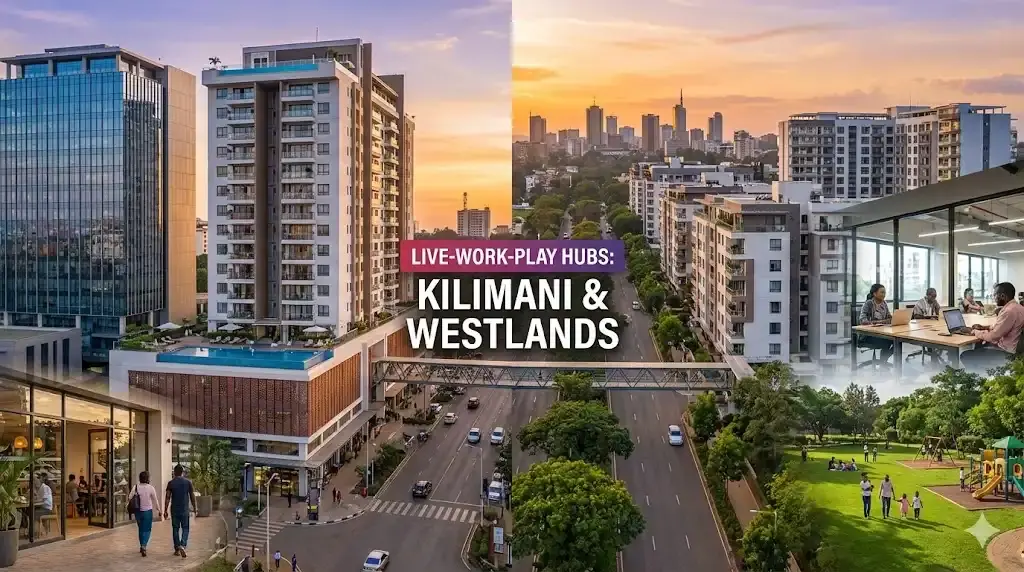
In 2026, Nairobi’s real estate and urban landscape continue to evolve, and two suburbs stand out as leading examples of modern city living: Kilimani and Westlands. These areas are no longer just places to live or work — they have become live-work-play hubs attracting professionals, investors, expatriates, and lifestyle seekers alike.
So what’s driving this transformation? Let’s explore the factors turning Kilimani and Westlands into the heart of urban lifestyle in Kenya’s capital.
1. Strategic Location & Connectivity
Both Kilimani and Westlands enjoy prime central locations within Nairobi:
Proximity to business districts: Kilimani sits just minutes from the CBD, Upper Hill, and Westlands, making it ideal for professionals who want short commute times.
Westlands as a business nexus: Just 3–4 km from the CBD with access via major corridors like Waiyaki Way and the Nairobi Expressway, Westlands enjoys excellent connectivity that supports commuting, business travel, and leisure mobility.
This strategic positioning allows residents to easily move between work, home, and play — a key foundation for the “live-work-play” concept.
2. Mixed-Use Developments Redefining Urban Spaces
In both neighborhoods, developers are increasingly focusing on mixed-use projects that integrate residential units, commercial spaces, and lifestyle facilities under one roof:
Vertical living meets work and leisure: High-rise apartments with gyms, rooftop lounges, co-working spaces, and retail at the base have become part of Kilimani’s evolving skyline.
Westlands’ integrated lifestyle hubs: With complexes like the Nairobi Global Trade Centre (GTC) combining offices, residential suites, a boutique mall, and hotel facilities, Westlands epitomizes mixed-use urban design.
These developments allow residents to work, shop, dine, and relax without crossing town — a hallmark of a live-work-play environment.
3. Thriving Business & Office Ecosystems
The commercial appeal of these suburbs has strengthened their live-work-play credentials:
Westlands as a business district: Ranking as one of Nairobi’s top business nodes — even outperforming other suburbs in office demand — Westlands attracts multinational corporations, professional services, and corporate headquarters.
Kilimani’s business dynamism: Kilimani is home to small and medium enterprises, coworking spaces, creative agencies, and more — providing local employment opportunities close to where residents live.
The proximity of workplaces to residences reduces commute stress and enhances work-life balance for professionals.
4. Lifestyle Amenities & Entertainment
Kilimani and Westlands are lifestyle magnets thanks to their vibrant social, leisure, and retail scenes:
Retail and dining: Major malls like Yaya Centre in Kilimani, and Sarit Centre, Westgate, and GTC Mall in Westlands offer shopping, fine dining, cinemas, and social spaces.
Nightlife: Westlands, in particular, is known for its nightlife — rooftop lounges, bars, and music venues that attract young professionals after work.
Health & wellness: Both areas host gyms, spas, and recreational facilities that support holistic urban living.
These amenities ensure that residents have leisure options right at their doorstep — another essential feature of live-work-play communities.
Strong demand dynamics reinforce Kilimani and Westlands as live-work-play hubs:
Residential appeal: Young professionals, expatriates, and corporate workers are drawn to upscale apartments with modern finishes and integrated amenities.
Rental and investment value: Both areas remain attractive for buy-to-let investors due to high occupancy and strong rental yields.
Modern infrastructure: Stable utilities, reliable internet, and ongoing upgrades in transport infrastructure support comfortable living and business operations.
These trends reflect sustained confidence in these neighbourhoods as urban centres that offer a complete lifestyle experience.
6. Dynamic Community & Urban Culture
Finally, Kilimani and Westlands are cultural hubs where urban culture thrives:
Diverse social fabric: Residents include local professionals, creatives, expats, and families who contribute to a cosmopolitan vibe.
Events and hotspots: Frequent social and cultural events — pop-ups, exhibitions, and music events — foster community and social engagement.
Walkable neighbourhoods: Sidewalks, cafés, and pedestrian-friendly streets encourage a sense of community and urban interaction.
This social dynamism cements their identities not just as places to live or work, but as places to enjoy life fully.
In 2026, Kilimani and Westlands exemplify Nairobi’s evolution toward modern urban living. With strategic connectivity, vibrant amenities, mixed-use developments, strong business ecosystems, and enduring real estate demand, these suburbs have matured into true live-work-play hubs — appealing to professionals, investors, and lifestyle enthusiasts alike.
Whether you’re seeking convenience, culture, career opportunities, or community, Kilimani and Westlands offer a complete urban experience that continues to redefine how people live in East Africa’s largest city.
Related posts:

If you've priced out a construction project recently and the numbers came back higher than you expected, you're not imagining it. Kenya's construction costs jumped sharply in the second quarter of 2026 — the steepest quarterly increase in nearly four...

For landowners with capital and a plot in the right location, building rental units from scratch can generate significantly better long-term returns than buying an existing property to rent out — but it's also a considerably more complex, capital-intensive, and...
 Ngong and Ongata Rongai: Nairobi's Southwestern Growth Corridor
  Gated Community Living: Is the Premium Worth It?
  Buying Property Through a SACCO: How It Works
  How to Handle a Dispute With Your Landlord or Tenant
  Kitengela: Why It's Attracting First-Time Buyers
Comments
0 approved commentsNo approved comments yet. Be the first to comment.