Subletting — renting out all or part of a property you're already renting to someone else — is common in Kenya, particularly among tenants traveling for extended periods, sharing costs with a roommate, or renting out a spare room. But subletting without following proper process can create real legal and financial risk for everyone involved: the original tenant, the subtenant, and the landlord. Here's what you actually need to know.
Is Subletting Legal in Kenya?
Subletting itself isn't inherently illegal in Kenya — but it's almost always subject to the terms of your original tenancy agreement. Most standard leases either prohibit subletting outright or require the landlord's explicit written consent before a tenant can sublet. Subletting without following whatever process your lease specifies — even if subletting isn't legally banned outright — can constitute a breach of your tenancy agreement, potentially putting your own tenancy at risk.
Check Your Lease First
Before considering subletting, carefully review your tenancy agreement for any clause addressing it. You'll typically find one of a few scenarios:
- Subletting is explicitly prohibited — attempting to sublet regardless would be a clear breach of your lease
- Subletting requires landlord consent — the most common arrangement, requiring you to formally request and receive approval before proceeding
- Subletting is silent or unaddressed — even here, it's safest to formally request permission rather than assume it's allowed by default, since ambiguity can still lead to disputes
Why Landlord Consent Matters, Even If Not Explicitly Required
Even in cases where your lease doesn't clearly prohibit subletting, involving your landlord and getting clear consent — ideally in writing — protects you in several ways:
- It avoids a landlord discovering an unauthorized subtenant and treating it as a serious breach, potentially leading to eviction proceedings
- It ensures the landlord is aware of who is actually occupying the property, which matters for security, insurance, and general property management
- It creates a documented, mutually understood arrangement that reduces the risk of later disputes
How to Sublet Properly
1. Request Written Consent from Your Landlord
Formally request permission to sublet, ideally in writing (even a simple email creates a useful record), clearly explaining the proposed arrangement — who the subtenant will be, the duration, and whether it's the whole unit or just part of it.
2. Draft a Proper Sublease Agreement
A sublease agreement between you (the original tenant) and your subtenant should cover the same essential terms as a standard tenancy agreement: rent amount, payment schedule, deposit, duration, and specific responsibilities — protecting both parties in the arrangement.
3. Remember You Remain Responsible to the Landlord
Subletting doesn't remove your obligations under the original lease — you remain legally responsible to your landlord for rent payment and property condition, regardless of what arrangement you have with your subtenant. If your subtenant fails to pay or damages the property, you're still on the hook to your landlord.
4. Screen Subtenants Carefully
Since you carry ongoing liability to your landlord, screening a potential subtenant — checking references, discussing expectations clearly — matters just as much as it would for a landlord screening a direct tenant.
5. Clarify What's Included
Be explicit in the sublease agreement about what's included — utilities, furnishings, shared spaces, parking — to avoid misunderstandings once the arrangement begins.
6. Keep Records of Everything
Payment records, communication with both your landlord and subtenant, and the signed sublease agreement itself all matter if a dispute arises later — thorough documentation protects you in any of these relationships.
What About Subletting Just a Room?
Renting out a spare room while you remain living in the property is technically still subletting, and the same principles apply — check your lease, get landlord consent where required, and have a clear written agreement with the person renting the room, even if the arrangement feels informal given the shared living situation.
Risks for Subtenants
If you're considering renting from someone who's subletting to you (rather than the actual property owner or head tenant), it's worth understanding your own exposure:
- Your rights are generally tied to the original tenant's lease — if their tenancy ends or is terminated, your right to stay is directly affected, regardless of what arrangement you have with them
- Verify the subletting arrangement is actually authorized by the landlord where required — an unauthorized sublet leaves you vulnerable if the landlord discovers and objects to the arrangement
- Get your own sublease agreement in writing, clearly outlining your rent, deposit, and terms, rather than relying on an informal verbal arrangement
Consequences of Subletting Without Permission
If required consent isn't obtained and a landlord discovers unauthorized subletting, potential consequences can include:
- Termination of the original tenancy, following proper legal notice procedures
- Legal action for breach of the tenancy agreement
- Loss of deposit or other financial consequences, depending on the specific lease terms
Given these risks, the relatively small effort of requesting proper consent upfront is almost always worth it compared to the potential consequences of an unauthorized arrangement being discovered later.
Subletting vs Assignment: Know the Difference
It's worth distinguishing subletting from lease assignment — subletting means you remain the tenant and retain responsibility while someone else occupies the space, whereas assignment transfers your entire tenancy interest to a new tenant, releasing you from further obligation (subject to landlord consent). These have different legal implications, and confusing the two can lead to misunderstandings about who remains responsible for what.
Find Rentals That Fit Your Living Arrangement
Whether you need a rental that allows subletting for flexibility, or you're looking for your own independent tenancy, Masion lists verified rental properties across Kenya to help you find the right fit.
Browse rental listings at masion.co.ke.
This article is for general informational purposes and does not constitute legal advice. Always consult a licensed advocate for guidance specific to your tenancy situation.
FAQs
1. Can I sublet my apartment without asking my landlord? It depends on your specific lease terms, but even where subletting isn't explicitly prohibited, it's safest to formally request and document landlord consent to avoid disputes or breach-of-lease consequences later.
2. Am I still responsible for rent if my subtenant doesn't pay? Yes, generally — subletting doesn't remove your obligations under the original lease. You remain legally responsible to your landlord regardless of your subtenant's payment behavior.
3. Do I need a written sublease agreement, or is a verbal arrangement enough? A written sublease agreement is strongly recommended, covering rent, deposit, duration, and responsibilities clearly — protecting both you and your subtenant if any dispute arises.
4. What happens if my landlord discovers I've sublet without permission? This can constitute a breach of your tenancy agreement, potentially leading to termination of your lease (following proper legal notice) or other consequences depending on your specific lease terms.
5. Is subletting just a spare room different from subletting the whole apartment? The same basic principles apply either way — check your lease, obtain landlord consent where required, and have a written agreement, even for a partial, room-only sublet.
6. What's the difference between subletting and lease assignment? Subletting means you remain the tenant and retain responsibility while someone else occupies the space, while assignment transfers your entire tenancy interest to a new tenant, releasing you from further obligation, subject to landlord consent.
Related posts:

Even in a well-functioning tenancy, disagreements happen — a delayed repair, a disputed deposit deduction, a disagreement over a rent increase. Most of these disputes are resolvable without escalating into a serious legal battle, provided both parties approach the situation...
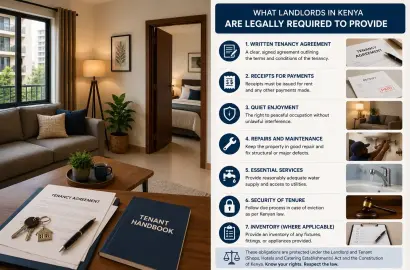
Many tenants in Kenya aren't entirely sure what their landlord is actually legally obligated to provide — and that uncertainty can lead to accepting substandard conditions, unreasonable rent increases, or improper eviction attempts without realizing there's recourse. Understanding the baseline...
 Ngong and Ongata Rongai: Nairobi's Southwestern Growth Corridor
  Gated Community Living: Is the Premium Worth It?
  Buying Property Through a SACCO: How It Works
  How to Handle a Dispute With Your Landlord or Tenant
  Kitengela: Why It's Attracting First-Time Buyers
Comments
0 approved commentsNo approved comments yet. Be the first to comment.