Lavington rarely dominates Nairobi property headlines the way Kilimani or Westlands do — and that's part of its appeal. It's a genuinely established, garden-style suburb that quietly delivers what many families and professionals actually want: more space, mature greenery, top-tier schools, and a short commute to both the CBD and Westlands, without the density or construction noise of its more heavily marketed neighbours.
Where Lavington Sits
Lavington sits roughly 7km west of Nairobi's CBD, bordered by Kileleshwa to the north, Kilimani to the east, and Lower Kabete Road toward Karen to the west. It's accessed primarily via James Gichuru Road, Gitanga Road, and Brookside Drive.
Commute times: CBD is roughly 15–20 minutes off-peak (35–60 minutes during peak hours) via James Gichuru Road and Uhuru Highway. Westlands is a notably shorter 10–15 minutes via Ring Road or Brookside Drive — making Lavington a genuinely practical base for professionals working in Westlands specifically.
Two Distinct Pockets: Upper vs Lower Lavington
Lavington isn't one uniform neighbourhood — it splits into two meaningfully different areas:
- Upper Lavington — quieter and leafier, dominated by large standalone houses on generous plots, closer in character to Karen than to denser central Nairobi suburbs
- Lower Lavington / Lavington Green — more accessible and higher density, with a greater mix of apartments and townhouses, offering more moderate price points within the same broader neighbourhood
Understanding which pocket a specific listing falls into matters considerably for both price expectations and daily lifestyle.
Lavington Property Prices in 2026
Renting apartments:
- 1-bedroom: roughly KSh 55,000–90,000/month
- 2-bedroom: roughly KSh 120,000–200,000/month
- 3-bedroom: roughly KSh 180,000–350,000/month, with an overall apartment average landing around KSh 120,000/month
- Furnished and serviced units command a clear premium over unfurnished equivalents
Renting standalone houses:
- Townhouses: roughly KSh 280,000–450,000/month
- Larger standalone homes: roughly KSh 350,000–800,000+/month, with average listed house rents (skewed toward larger properties) sitting notably higher across the market
Buying:
- Apartments range from around KSh 14 million for 2-bedroom units to KSh 35 million+ for premium 3–4 bedroom units
- Larger standalone executive homes and villas can range considerably higher, into the tens of millions, reflecting plot size and finishes
Why Families and Expats Choose Lavington
Top international schools within short driving distance. Braeburn School, Braeside School, Nairobi International School (NIS), Rusinga School, and St. Austin's Academy are all accessible without a lengthy commute — a major factor for both expat and local families prioritizing consistent, high-quality education without relocating further out.
Genuine "garden suburb" character. Lavington's mature trees and generally lower density (particularly in Upper Lavington) give it a distinctly calmer feel than Kilimani or Westlands, while remaining close enough to both for convenient access to work and amenities.
Strong amenities. Lavington Mall and The Junction Mall cover shopping and dining, while Jaffrey's Sports Club adds recreational options — all without needing to travel into central Nairobi for daily needs.
Comprehensive security infrastructure. Gated communities and established security arrangements are the norm across much of Lavington, a significant draw for families and expats prioritizing safety.
Investment Outlook
Lavington is widely regarded as a strong buy-to-let suburb, supported by steady demand from both established local families and diaspora tenants seeking the specific combination of space, schools, and security Lavington offers. Properties near the established international schools in particular tend to see consistent rental demand, given how much weight expat and diaspora families place on school proximity when choosing where to live.
Compared to Kilimani (covered in our guide on living in Kilimani), Lavington generally offers more space per shilling — a meaningful differentiator for families who've outgrown an apartment but aren't ready for Karen's larger price tag and longer commute, discussed further in our guide on living in Karen.
Renting Safely in Lavington, Especially From Abroad
Given Lavington's popularity with diaspora tenants and returning Kenyans, a few precautions matter:
- Insist on a written tenancy agreement covering rent, deposit, notice period, and exactly what's included
- Pay deposits only to a verifiable, traceable account — never to a personal mobile number based solely on photos
- Use a verified agent rather than an unknown broker, particularly when renting or buying from abroad
- For diaspora tenants specifically, a video walkthrough before paying anything adds an important layer of protection against distance-related fraud risk
Who Should Choose Lavington?
- Families prioritizing space, top school access, and a calmer residential environment
- Professionals working in Westlands, given the notably short 10–15 minute commute
- Expats and diaspora buyers seeking a genuinely established, secure, garden-style suburb
- Investors targeting steady, long-term rental demand from a stable, family-oriented tenant base
Explore Lavington with Masion
Whether you're drawn to Upper Lavington's spacious standalone homes or Lower Lavington's more accessible apartments, Masion lists verified properties across the neighbourhood to help you find the right fit for your budget and lifestyle.
Browse Lavington listings today at masion.co.ke.
FAQs
1. What's the difference between Upper and Lower Lavington? Upper Lavington is quieter and leafier, dominated by large standalone houses on generous plots, while Lower Lavington (or Lavington Green) is more accessible and denser, with a greater concentration of apartments and townhouses at more moderate price points.
2. Is Lavington good for someone working in Westlands? Yes, particularly so — Lavington offers one of the shortest commutes to Westlands of any established Nairobi suburb, typically just 10–15 minutes via Ring Road or Brookside Drive.
3. How does Lavington compare to Kilimani in price? Lavington generally offers more space per shilling than Kilimani, making it a common choice for families who've outgrown an apartment but want to stay in a similarly central, well-connected part of Nairobi.
4. What schools are near Lavington? Braeburn School, Braeside School, Nairobi International School, Rusinga School, and St. Austin's Academy are all within short driving distance, making Lavington especially popular with families prioritizing school access.
5. Is Lavington a good area for rental investment? Yes, it's widely regarded as a strong buy-to-let suburb, supported by steady demand from families and diaspora tenants, particularly for properties near the area's well-regarded international schools.
6. What should diaspora buyers or renters be careful of in Lavington? Given Lavington's popularity with diaspora tenants, it's important to use a verified agent, insist on a written tenancy agreement, pay deposits only to traceable accounts, and arrange a video walkthrough before paying anything if renting or buying from abroad.
Related posts:

Southwest of Nairobi, along Ngong Road and Magadi Road, two well-established satellite towns — Ngong and Ongata Rongai — have quietly built some of the most consistent rental demand in the entire Nairobi Metropolitan Area, even as sale prices in...
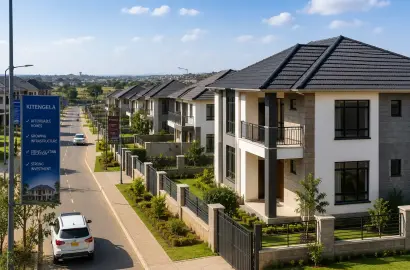
Thirty years ago, Kitengela was Maasai group ranch land on the far southern edge of Nairobi's reach. Today it's a bustling suburban town with malls, international schools, and one of the strongest value propositions in the entire Nairobi Metropolitan Area...
 Ngong and Ongata Rongai: Nairobi's Southwestern Growth Corridor
  Gated Community Living: Is the Premium Worth It?
  Buying Property Through a SACCO: How It Works
  How to Handle a Dispute With Your Landlord or Tenant
  Kitengela: Why It's Attracting First-Time Buyers
Comments
0 approved commentsNo approved comments yet. Be the first to comment.