Thinking of investing in Kenyan real estate? The smart money has already moved.
For years, Nairobi dominated Kenya’s property market. But with high land prices, congestion, and constrained supply, investors are shifting outward. Today, satellite towns like Ruiru, Kitengela, Naivasha, Nanyuki, Isinya, Vipingo, and Malindi have become the new hotspots—offering better affordability, faster appreciation, and improved infrastructure.
At Masion.co.ke, we break down the most promising growth zones and the digital tools now transforming development in Kenya, including the new e-Construction Permit Portal.
📈 1. The Top Real Estate Hotspots Driving Kenya’s Growth
Satellite towns are booming due to improved road networks, modern amenities, and strong housing demand from Kenya’s expanding middle class.
Here’s where investors are making the highest returns:
| Town | Investment Focus | Why It’s Hot |
|---|---|---|
| Ruiru | Apartments & Commercial | Direct access to Nairobi via Thika Road & Northern Bypass. Massive rental demand from professionals and university students. |
| Kitengela | Residential & Industrial | Affordable land, close to the EPZ, and strong growth in logistics and manufacturing. |
| Naivasha | Hospitality & Industrial | SGR access, geothermal power, tourism growth around Lake Naivasha & Hell’s Gate. Ideal for holiday homes and warehousing. |
| Malindi | Holiday Homes & Tourism | Beachfront investment opportunities and a rising tourism sector. |
| Nanyuki | Residential & Leisure Estates | High demand from high-income buyers. Perfect for gated communities, ranches, and vacation homes. |
| Isinya & Vipingo | Land Banking & Agri/Industrial | Isinya offers large, affordable plots for long-term expansion. Vipingo excels in coastal logistics and luxury resort living. |
Market Snapshot:
You can still secure a prime plot in Ruiru or Kitengela for the cost of a small apartment in Nairobi—with far greater appreciation potential over the next 3–5 years.
Satellite towns continue to outperform older Nairobi suburbs in land value growth.
🏗️ 2. Pro Tip for Developers: Fast-Track Approvals Using the e-Construction Permit Portal
For many years, the biggest challenge for investors and developers was the long, bureaucratic approval process. The government has now transformed this through the Electronic Development Application Management System (e-DAMS)—commonly known as the e-Construction Permit Portal.
✔ What Is the e-Portal?
A county-based digital platform that automates the submission, review, payment, and approval of building permits.
✔ Why Developers Should Use It
Faster Approvals: Processes that once took months now take weeks in many counties.
Transparency: Zero dependence on brokers—everything is tracked digitally.
Real-Time Updates: Apply, upload plans, pay fees, and monitor progress online.
Secure Approvals: Permits now come with digital signatures and QR authentication, preventing forgery.
This system is a game changer for anyone planning to build in Kenya in 2025 and beyond.
The Future of Real Estate Is Outside the City
Kenya’s property market is expanding outward—and satellite towns are now the best places to find:
Affordable land
High appreciation rates
Fast-growing residential and commercial demand
Improved connectivity and infrastructure
New investment opportunities in tourism, industry, and logistics
With digital tools like the e-Construction Permit Portal, investors can now move from land purchase to development more efficiently than ever.
Related posts:
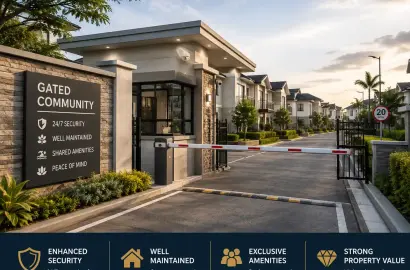
Gated communities have become one of the defining features of Kenya's growing satellite towns and premium suburbs alike — offering shared security, amenities, and a managed environment in exchange for a genuine price premium over comparable standalone properties.

For many Kenyans, the biggest obstacle to owning property isn't willingness — it's raising a lump sum upfront. SACCOs (Savings and Credit Cooperative Organizations) have become one of the most accessible ways around this problem, offering both structured savings-based housing...
 Ngong and Ongata Rongai: Nairobi's Southwestern Growth Corridor
  Gated Community Living: Is the Premium Worth It?
  Buying Property Through a SACCO: How It Works
  How to Handle a Dispute With Your Landlord or Tenant
  Kitengela: Why It's Attracting First-Time Buyers
Comments
0 approved commentsNo approved comments yet. Be the first to comment.