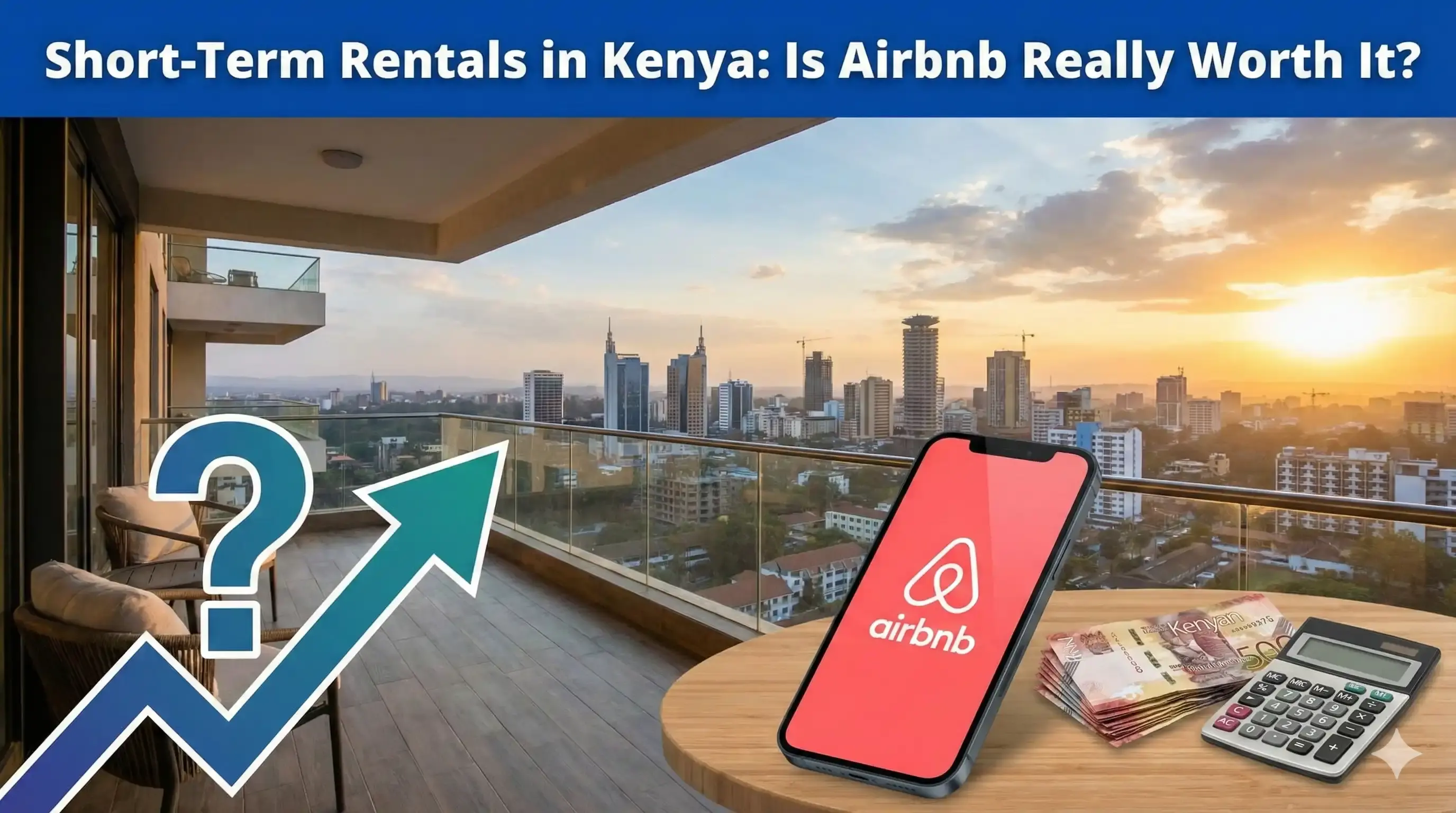
Airbnb has transformed Kenya’s hospitality landscape. From chic Nairobi studios to beachfront villas in Diani, short-term rentals have become a popular strategy for Kenyans seeking higher returns than traditional renting.
But is Airbnb as profitable as the online success stories suggest? Can you truly make KSh 100,000+ per month, or is there more to the story?
This in-depth guide breaks down real earnings, hidden costs, legal considerations, and practical tips to help you decide whether Airbnb is the right investment for you.
How Much Can You Really Earn from Airbnb in Kenya?
Earnings vary widely, but three factors matter most:
1. Location Is the Biggest Deciding Factor
Different cities—and even neighborhoods—perform differently.
Nairobi
CBD studios: KSh 4,000 – 5,500 per night
Kilimani/Kileleshwa/Westlands: KSh 5,000 – 8,500 per night
Karen/Lavington homes: KSh 12,000+ per night
Coastal Kenya
Diani villas: KSh 15,000 – 35,000 per night in high season
Watamu/Malindi cottages: KSh 8,500 – 18,000 per night
Upcountry
Nanyuki cabins: KSh 7,500 – 15,000 per night
Nakuru/Nyeri: KSh 4,000 – 7,000 per night
2. Occupancy Rates (The Real Profit Driver)
Nairobi city areas average 60–75% monthly occupancy
Coastal areas fluctuate between 30% in low season and 90% in high season
Upcountry towns average 30–45%
Example Calculation
A 2 Bedroom at KSh 5,000 per night with 65% occupancy earns:
5,000 × 19.5 nights = KSh 97,500 (before expenses)
That’s the number many hosts advertise—but the true earnings depend on what comes after the deductions.
The Hidden Costs of Running an Airbnb in Kenya
Airbnb income is not passive—and the costs add up.
1. Platform Fees
Airbnb host service fee: 3%
Payment processing: 2–3%
This means a guest paying KSh 5,000 leaves you with KSh 4,700–4,800.
2. Operational Costs
These are unavoidable:
Cleaning: KSh 500–1,500 per turnover
Electricity (especially with heaters/AC)
Water
WiFi
Netflix / DSTV
Guest toiletries and restocking
A busy listing might need cleaning 10–15 times per month.
3. Maintenance & Repairs
Short-term guests increase wear and tear.
Expect frequent:
Plumbing repairs
Broken appliances
Repainting
Linen replacement
You must constantly keep the unit in hotel-like condition.
4. Your Time and Involvement
Airbnb hosting includes:
Responding to inquiries
Approving bookings
Coordinating check-ins
Handling complaints
Solving emergencies (often late at night)
This is why many hosts eventually hire a co-host or manager.
Legal Considerations Every Airbnb Host Must Know
Kenya’s short-term rental space is still evolving, and landlords must understand the rules.
1. Taxes
Airbnb income must be declared to KRA under rental income or business income.
2. Zoning Restrictions
Some areas limit short-term rentals, especially:
Gated estates
Residential-only zones
Apartments with strict rules
3. Apartment/Building Rules
Many management companies require:
Prior approval
Guest registration
Security deposits
Banning commercial hosting altogether
Always confirm with:
✔ apartment management
✔ residents’ association
✔ the property owner (if you’re not the owner)
Airbnb vs Traditional Rentals: Which Is Better?
Here’s a simplified comparison:
| Feature | Airbnb | Long-Term Rental |
|---|---|---|
| Income | Higher potential, unpredictable | Fixed and stable |
| Vacancy | Can be high in some months | Very low |
| Time Required | High involvement | Minimal |
| Maintenance | Frequent repairs | Low |
| Best for | Tourist areas, designer spaces | Normal residential units |
Who Should Consider Airbnb in Kenya?
Airbnb works well if:
Your property is in a high-demand area
You can actively manage guest communications
You want higher returns and can tolerate volatility
Your property has unique features (view, décor, proximity to attractions)
Long-term renting is better if:
You want consistent monthly income
You live far from the property
You do not want frequent repairs
Your unit is in a quiet residential estate
How to Make Airbnb Profitable in Kenya (Expert Tips)
Here’s what top-performing hosts do:
1. Use Competitive Pricing
Check other listings in your area.
Adjust prices based on:
Weekdays vs weekends
Holiday seasons
Local events (festivals, conferences, marathons)
2. Invest in Professional Photography
Listings with high-quality images receive 40% more bookings.
Show:
Natural lighting
Clean décor
Wide-angle shots
Unique features
3. Focus on Guest Reviews
90% of guests filter by rating.
To maintain 4.8 stars and above:
Offer hotel-level cleanliness
Respond quickly
Provide accurate listing details
Fix issues immediately
A single negative review can drop monthly bookings by 20–30%.
4. Consider Hiring a Co-Host
Professional managers charge 20–30% of earnings but:
Handle check-ins
Clean and restock
Respond to guests
Maintain the property
This is ideal for busy owners or diaspora landlords.
The Final Reality Check
Airbnb is not a “quick profit” business. It requires:
Time
Effort
Customer service skills
Regular maintenance
But if managed well—and if the property is in a strong location—Airbnb can outperform long-term rentals significantly.
If you want predictable income, choose traditional renting.
If you want higher revenue and can handle the work, Airbnb is worth it.
Looking for a Property Perfect for Airbnb or Long-Term Rentals?
Explore verified, high-return investment properties on Masion.co.ke, Kenya’s trusted real estate platform.
A little more clarity
Frequently asked questions
What does this article cover?
Airbnb has transformed Kenya’s hospitality landscape. From chic Nairobi studios to beachfront villas in Diani, short-term rentals have become a popular strategy for Kenyans seeking higher returns than traditional renting.
How can I find properties related to my requirements?
Browse the property listings and filter by location, price, and property type. You can also use Request a Property to share your requirements and receive matching suggestions.
How can I ask about a property?
Open the property page to review its details and contact the listing agent using the enquiry options shown there. Confirm availability and arrange a viewing with the agent.
Join the conversation
Comments
Looking for a property?Get help with a request tailored to your location and budget.
No comments yet. Share a thought or ask a question above.