If you’ve lived in Kenya long enough, you know one truth:
Land issues are never far away.
Almost everyone has heard a story — a plot sold twice, a relative who appears out of nowhere, or a neighbor who quietly pushes their boundary “just a little bit.” Real estate in Kenya has its fair share of twists, and if you’re not prepared, you can easily find yourself trapped in a stressful and costly dispute.
I’ve dealt with countless cases over the years. One that still stands out is when a client called in distress after discovering that her neighbor had extended a wall halfway across her compound — without warning, without shame, and without any regard for boundaries.
But here’s the reassuring part:
A property dispute doesn’t have to derail your life or ruin your investment — if you know what to do.
This guide breaks down the process clearly so you can navigate any dispute with confidence.
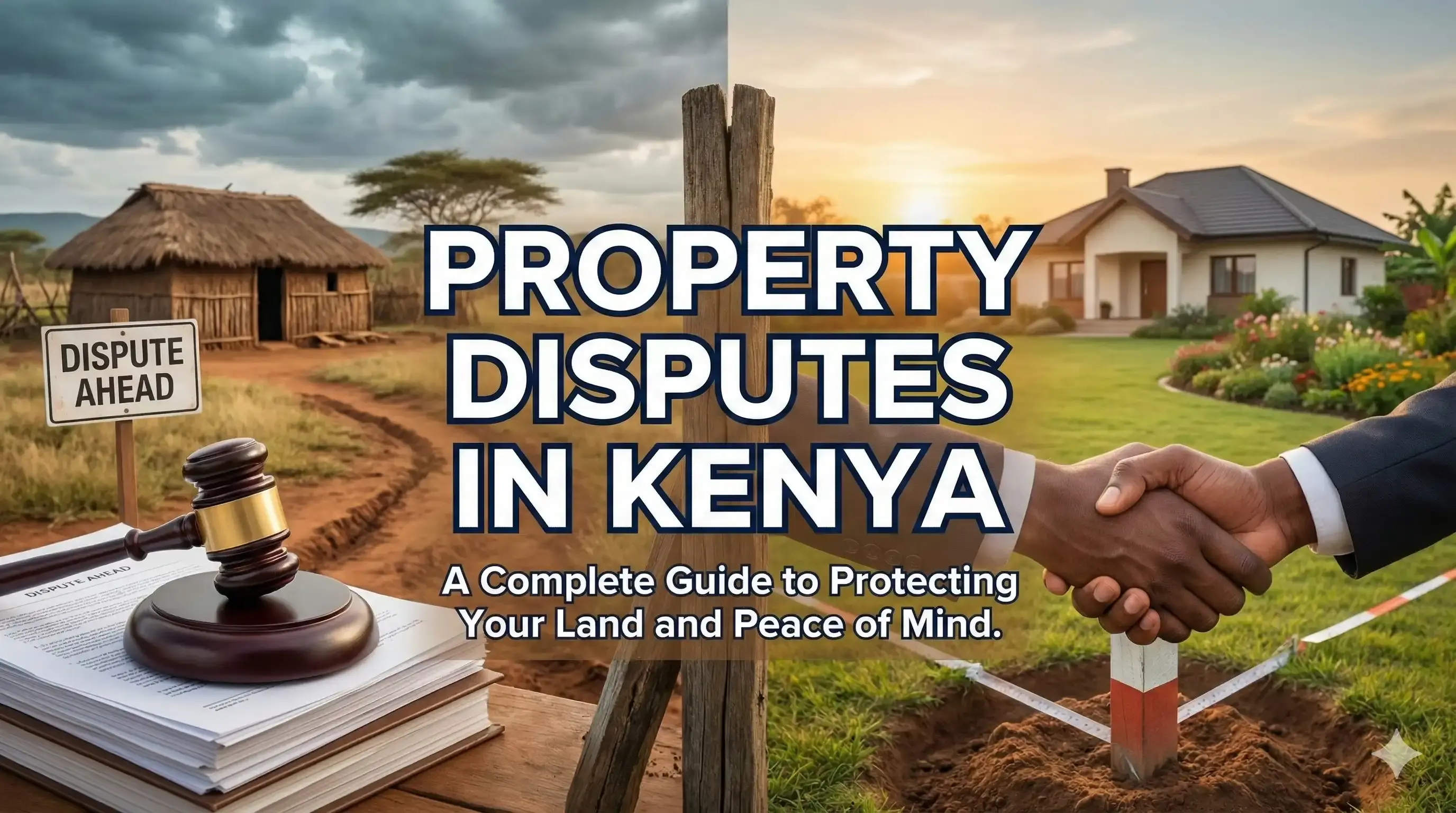
🔍 What Exactly Is a Property Dispute in Kenya?
A property dispute arises when two or more parties disagree over land ownership, boundaries, usage rights, or legal claims attached to a property.
Some of the most common situations include:
Disputes over who actually owns the land
Confusion or disagreements about boundary lines
Family disagreements over inherited property
Conflicts between landlords and tenants
A co-owner selling or leasing land without joint approval
Fraudulent or duplicate titles
Squatters occupying private land
A previous seller allocating the same plot to multiple buyers
These disputes range from mild misunderstandings to long-running legal battles — but most can be resolved when handled properly.
1️⃣ First Step: Remain Calm and Begin Documenting
When you realize something is wrong, your instinct might be to confront the other party, escalate the argument, or react emotionally.
Avoid this at all costs.
Aggressive reactions can:
Strengthen the other party’s case
Trigger hostility
Lead to police involvement
Create evidence that works against you
Instead:
Keep your composure
Do not destroy or alter anything on the land
Avoid confrontations or heated discussions
Start taking photos, videos, and notes discreetly
Your goal at this stage is simple: preserve evidence and avoid making the situation worse.
2️⃣ Step Two: Confirm Who Legally Owns the Land
Every dispute must begin with clarity, and that clarity comes from documentation — not hearsay, emotion, or assumptions.
Start with your title deed:
Is your name correctly listed?
Are there spelling errors?
Is the parcel number accurate?
Then move on to an official land search through:
Ardhisasa (for digitized titles)
The Ministry of Lands registry (for older titles)
The land search will show critical information such as:
The registered owner
Whether the land has a caveat
Encumbrances (e.g., bank charges)
Court orders
Double allocations
Transfers or ownership changes
This single step often reveals the truth — and sometimes the problem.
3️⃣ Step Three: Engage a Real Estate Lawyer Immediately
Many Kenyans believe the only solution is to rush to court.
But that often leads to years of stress, delays, and legal costs.
A smarter approach is to consult a qualified real estate lawyer early.
A lawyer will help you:
Understand your legal position
Advise on immediate steps to protect your interest
Communicate formally with the opposing party
Explore mediation and ADR options
Determine whether court is necessary
Identify fraud or illegal transfers
In many cases, disputes are resolved through:
Mediation
Negotiation
Arbitration
Alternative Dispute Resolution (ADR)
These methods save time, money, and relationships — especially in family or neighbor-related disputes.
4️⃣ Step Four: Pause All Construction or Land Development
Even if you firmly believe the land is yours, avoid building or continuing any development until the dispute is resolved.
Constructing during an active dispute could lead to:
Court injunctions
Demolition orders
Loss of materials
Loss of the development if the case goes against you
Higher hostility and escalation
Building sends the wrong message to courts and mediators — that you’re acting in bad faith.
Resolve the conflict first. Build later.
5️⃣ Step Five: Keep a Thorough Record — Evidence Wins Cases
In property matters, memory is unreliable — but documents don’t lie.
Start gathering:
All written communication (letters, texts, WhatsApp messages)
Receipts of payments
Survey reports or maps
Photos and videos of boundaries and structures
Agreements and contracts
ID copies and PINs involved in any transaction
Witness statements, if available
Create a dedicated folder — physical, digital, or both — and store everything.
When your lawyer or a judge can clearly see the timeline of events, you gain a major advantage.
📌 Key Takeaway
Property disputes in Kenya can be complicated, emotional, and exhausting — but they are manageable with the right approach.
The most important things you can do are:
Stay calm
Verify ownership
Seek legal advice early
Avoid rash decisions
Keep detailed documentation
These simple steps can save you millions, protect your land, and keep your investment secure.
Related posts:
If you've priced out a construction project recently and the numbers came back higher than you expected, you're not imagining it. Kenya's construction costs jumped sharply in the second quarter of 2026 — the steepest quarterly increase in nearly four...

For landowners with capital and a plot in the right location, building rental units from scratch can generate significantly better long-term returns than buying an existing property to rent out — but it's also a considerably more complex, capital-intensive, and...
 Ngong and Ongata Rongai: Nairobi's Southwestern Growth Corridor
  Gated Community Living: Is the Premium Worth It?
  Buying Property Through a SACCO: How It Works
  How to Handle a Dispute With Your Landlord or Tenant
  Kitengela: Why It's Attracting First-Time Buyers
Comments
0 approved commentsNo approved comments yet. Be the first to comment.